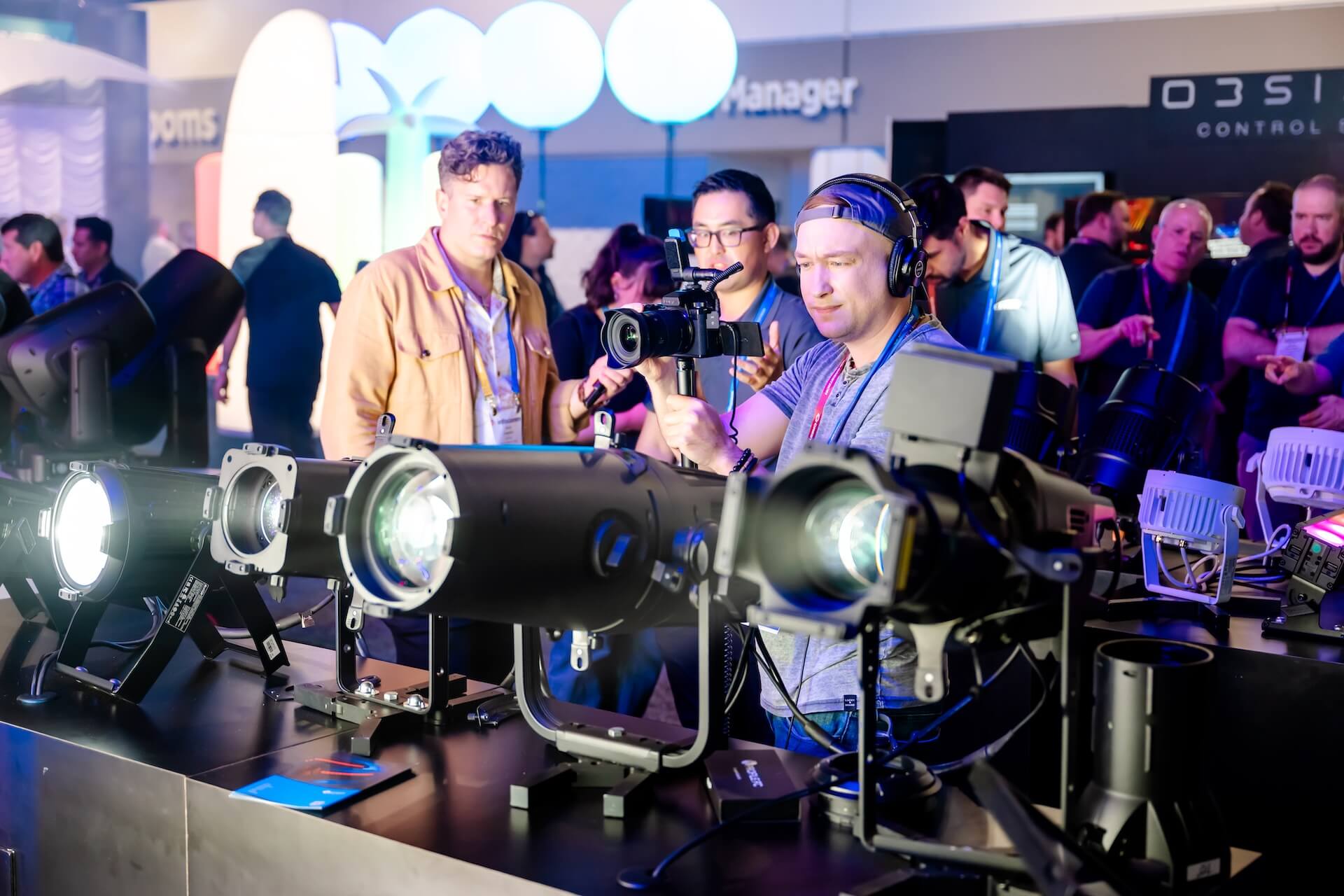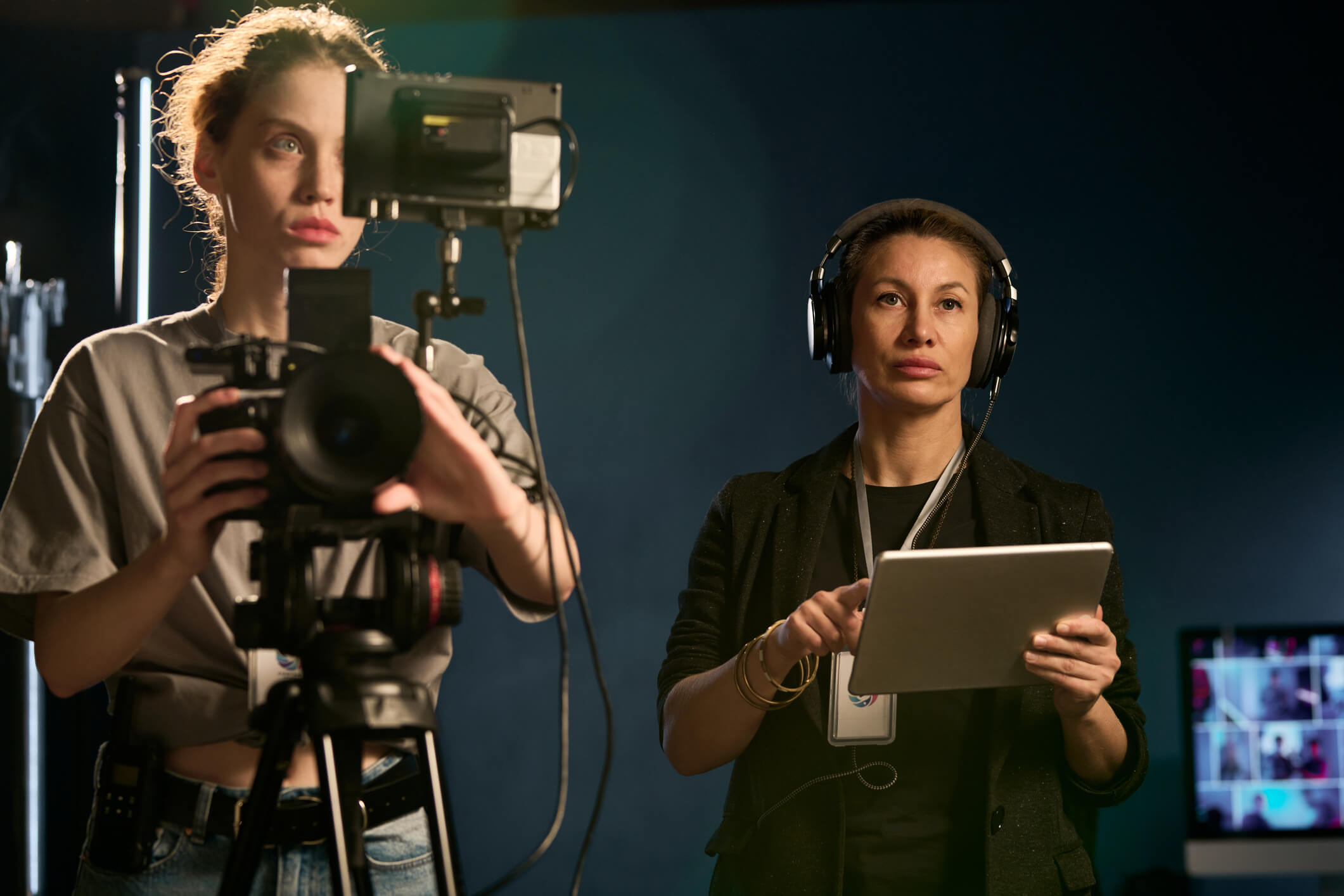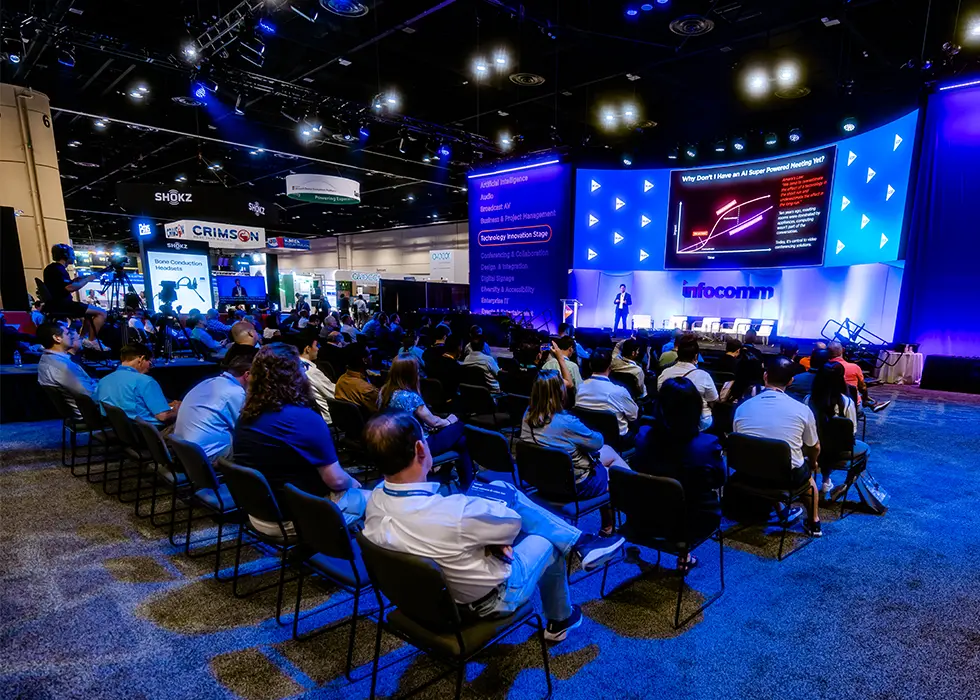
During "Broadcast AV on Game Day: Technology and Careers in Live Sports" on the Spotlight Stage at InfoComm 2026, Patricia White, director of education and training for the International Alliance of Theatrical Stage Employees (IATSE), brought together sports production professionals from across the industry, both in person and virtually, to discuss their career paths, the technologies shaping today's broadcasts, and what it takes to succeed behind the scenes.
Loading...
Rachel McLendon: There's More Than One Way Into Sports Broadcasting
Rachel McLendon, an IATSE international representative with more than 15 years of experience covering professional and collegiate sports for networks including CBS, Fox, and NBC, opened the discussion by addressing a common misconception: many people assume there's only one path into sports broadcasting.
In reality, she explained, people enter from a variety of backgrounds. Some begin in broadcasting programs, others in theater, live events, or traditional AV. Many learn on the job, building technical skills while discovering where they fit within a production team.
She also emphasized that sports broadcasting is far more collaborative than most viewers realize. Every broadcast depends on camera operators, replay technicians, graphics specialists, audio engineers, stage managers, producers, and many others working together in real time. While audiences focus on the action on the field, another team is working behind the scenes to make sure every moment reaches viewers without interruption.
McLendon encouraged attendees not to become discouraged if they didn't have traditional broadcast experience. Instead, she pointed to high school productions and college athletics as places where newcomers can gain practical experience.
Spencer Durose: Learning the Industry From the Inside
Spencer Durose's career illustrated exactly what McLendon described. Before joining the Sacramento Kings, he gained experience producing high school sports before earning an internship with the team's AV department. Working his first professional sporting event gave him a new appreciation for the scale of live production and the number of people required to keep everything running.
Rather than focusing on the technology, Durose reflected on how every department worked together. Seeing production crews coordinate camera operators, graphics, and other moving parts helped him understand the complexity of a professional broadcast.
His current role also reflects how much sports production has evolved. The Sacramento Kings' control room doesn't simply create content for the arena's video boards. The same production supports multiple platforms, serving in-house audiences while also contributing to broadcast and digital workflows.
Sharlene Mansfield: Building a Career One Production at a Time
Sharlene Mansfield said to think of every production as a learning opportunity. Drawing on her experience as a stage manager with organizations including the Golden State Warriors, San Francisco Giants, Oakland A's, and Sacramento Kings, she pointed to board shows at sports venues as a great place to get started.
Those productions provide hands-on experience with graphics, audio, video, and replay while helping crew members understand how each department contributes to a live show. The skills developed there can open doors to remote production trucks, news studios, and other live production environments, such as conferences and events.
She also spoke about one of the less visible parts of the job: responding when things don't go according to plan. Equipment fails. Audio drops. The lights go out. Through it all, the production has to keep moving.
Mansfield said her role is to keep talent focused while the technical crew resolves the issue behind the scenes. Staying calm, communicating clearly, and adapting quickly are just as important as understanding the technology.
Willie Condrey: Why Networking Has Become Part of the Job
Technology has changed dramatically since many broadcast professionals entered the industry, and Willie Condrey, a video operator for the Sacramento Kings, has experienced that shift firsthand.
He initially focused on cameras and visual storytelling. As productions became increasingly connected, however, networking became part of his everyday workflow.
Condrey described productions where equipment located miles away could still be monitored and adjusted remotely through IP networking. Cameras, audio consoles, and production systems now communicate across networks, making basic knowledge valuable even for professionals whose primary responsibilities aren't IT-related.
Kevin Bradley: Automation Still Depends on People
Automation may be changing production workflows, but Kevin Bradley made it clear that it hasn't eliminated the need for experienced professionals.
As a pilot (another name for technical director) with the Big Ten Network, he prepares productions long before a show goes live by programming graphics, transitions, audio, and other elements into an automated system. Once the broadcast begins, he continues making creative decisions while monitoring multiple systems at the same time.
He explained that automation reduces repetitive tasks, but it doesn't make decisions. Someone still has to determine the pace of the show, monitor graphics, respond to unexpected problems, and make creative choices that shape the viewing experience.
Different Paths, Same Destination
Every panelist described a different path into live sports production, yet their advice was the same:
Build experience wherever you can.
Ask questions and stay curious.
Learn from the people around you.
Adapt as technology continues to evolve.
For AV professionals considering a career change, the discussion offered an encouraging message. Many of the technical skills they already use every day translate directly to modern sports production. The next step is finding an opportunity to put those skills into practice.