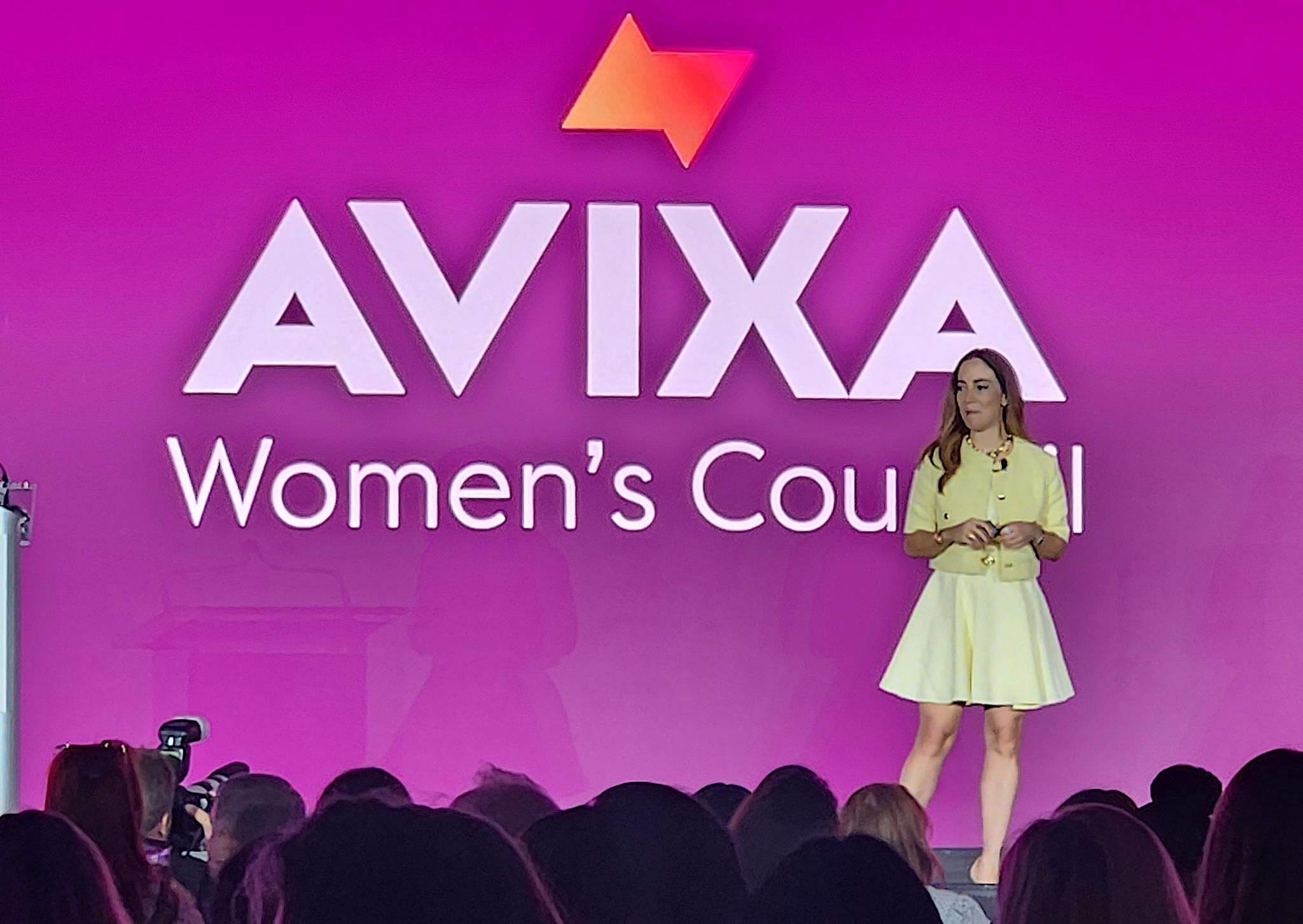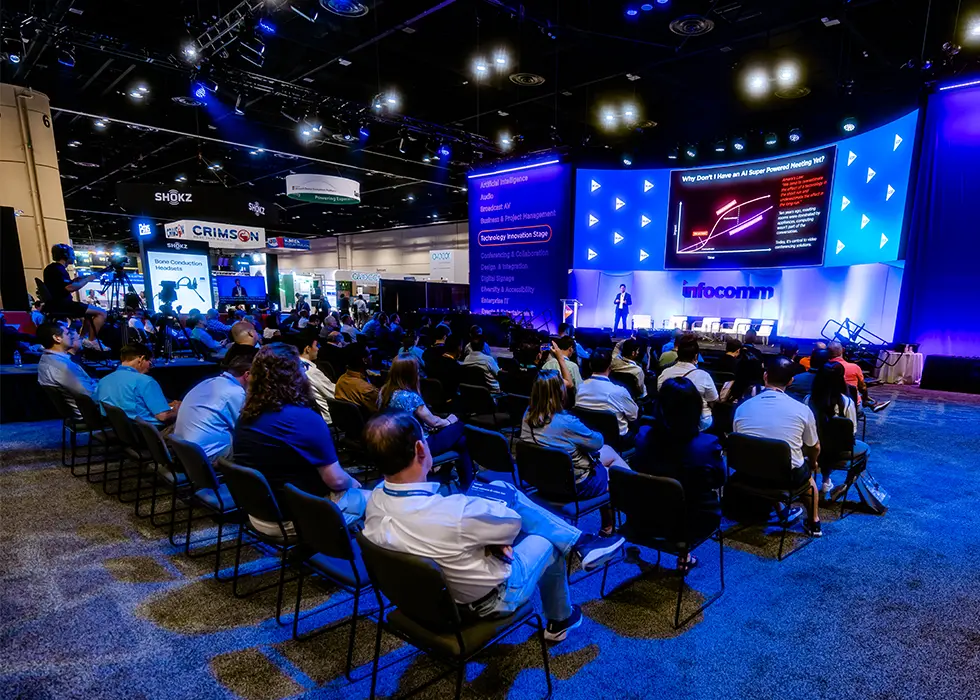
Kicking off the educational sessions at InfoComm 2026 was "Live Event Planning Roles & Responsibilities," led by SEAS Productions Owner and Chief Experience Officer Troy Peters and Tempo Live Events, Inc. Founder and CEO Nancy Spooner.
Joining them were Emerson Principal Video Production Project Manager Chris Roysden, whose company acquired NI (National Instruments) and who is also a longtime client of SEAS Productions, and SEAS Productions Director of Business Development and Industry Engagement Taylor Abbate.
Throughout the hour-long session, the panel drew on their experiences from both the client and production sides of the industry to share three key takeaways for planning and executing successful live events.
Know Who Needs the Information — and Who Doesn't
One of the first topics Peters and Spooner addressed was the importance of tailoring communication to different stakeholders.
In live events, information passes through multiple layers, from executive leadership and event planners to production managers and technical crews. According to the panel, one of the biggest mistakes teams can make is treating every audience the same.
Peters explained that executive stakeholders often want a concise overview of what is happening. They need enough information to make decisions and understand outcomes, but they typically don't need to know every production detail. Event planners and producers, on the other hand, are often looking for more specifics because they are responsible for coordinating logistics, managing timelines, and ensuring the event stays on track.
As information moves closer to show execution, communication becomes even more detailed. Technical teams need cue sheets, timelines, and production schedules, while backstage crews are focused on speaker movement, timing, and what needs to happen next.
"They want the detail. The C-suite does not want the detail," Peters said. "They just want to know you're going to nail it, right, and get the show done right."
The panel also stressed the importance of establishing communication preferences early in the planning process. While some clients prefer email, others may prefer phone calls or text messages. The goal is to make sure everyone understands how information will be shared and who is responsible for making decisions.
Roysden said that while he welcomes information from production partners, he prefers important decisions to be documented.
"Tell me and then write it," he said, "just so I can go back and reference it later."
The session also touched on communication during show days, when information often moves quickly and decisions need to be made in real time. Abbate noted that identifying who is responsible for specific areas of an event can help eliminate confusion when multiple stakeholders are involved.
"If this is anything related to the general sessions, it goes to so-and-so," she said, describing the importance of establishing clear lines of communication before an event begins.
Without that structure, conflicting instructions and too many decision-makers can slow down the process and create unnecessary frustration for both clients and production teams.
"It's about that communication," Peters said. "That's the thing that's going to set you up for success."
Every Role Exists for a Reason
Another major focus of the session was helping attendees better understand the many positions involved in live event production.
As Peters and Spooner walked through a production organizational chart, they explained how event teams evolve throughout the planning and execution process. During pre-production, teams may consist of a client, executive producer, technical director, and event planner. Once the event moves on-site, additional positions are added to support execution.
Those roles can include show callers, deck managers, graphics operators, content producers, audio engineers, video engineers, and technical managers, among others. The panel encouraged attendees to look beyond titles and focus on responsibilities and ownership.
Spooner, for example, highlighted the growing importance of content producers. As events incorporate more videos, graphics, and LED content, managing presentations and other assets has become a job of its own.
"If you don't have that person, you're going to feel it very quickly," she said.
She noted that content producers help keep those materials organized and ready for use, particularly on productions with large LED walls and custom visual content.
The panel also talked about the growing use of the title "deck manager" in place of "assistant stage manager."
According to Spooner, the title better reflects the responsibilities associated with the role. Deck managers coordinate presenters backstage, manage stage access, and help keep the show moving according to schedule. Rather than serving as an assistant, they oversee an important part of the production.
The session further explored how titles can vary throughout the industry. Spooner shared an example of a client requesting a stage manager when they were actually looking for someone to perform duties commonly associated with a deck manager.
"When you're looking for help and you're looking to fill out your team, the most important thing is to know what you want this teammate to do," she said.
Help Clients Understand the Why
The final takeaway focused on helping clients understand staffing and equipment recommendations.
Whether discussing additional crew members, backup systems, or redundant equipment, production teams are often asked why those resources are necessary. From the client perspective, Roysden said he wants to understand the reasoning behind a recommendation.
"Why do I need two people? Explain it to me," he said.
However, when something goes wrong during a live event, the value of those resources quickly becomes clear.
He pointed to backup computers as an example.
"The reason I need two computers instead of one is because when this one drops, I can just immediately cut over, and your screen doesn't really go down," he said.
The panel also shared examples of technical issues that surfaced during events, including projection problems, missed cues, and microphone failures. In each case, they emphasized the importance of having qualified people in place and trusting them to do their jobs.
Spooner recalled a show where problems became apparent before the event began but were not escalated quickly enough. The experience reinforced the importance of speaking up when problems arise rather than hoping they will resolve themselves.
"I'm a very empathetic person, and I want that person to succeed, but I also need my show to succeed," she said. "Sometimes you have to put your show ahead of the person working the position."
The discussion also made clear that many event planners are not trying to eliminate resources simply to save money. In many cases, they simply need additional context before making a decision.
"If I understand the why, that's going to allow me to have more trust in my AV partner and know they're not just finding ways to nickel-and-dime me," Abbate said. "They're actually protecting me. And that makes me feel more confident."
Interested in Live Events?
Check out all of AVIXA's articles and videos on live events in AVIXA Explore.