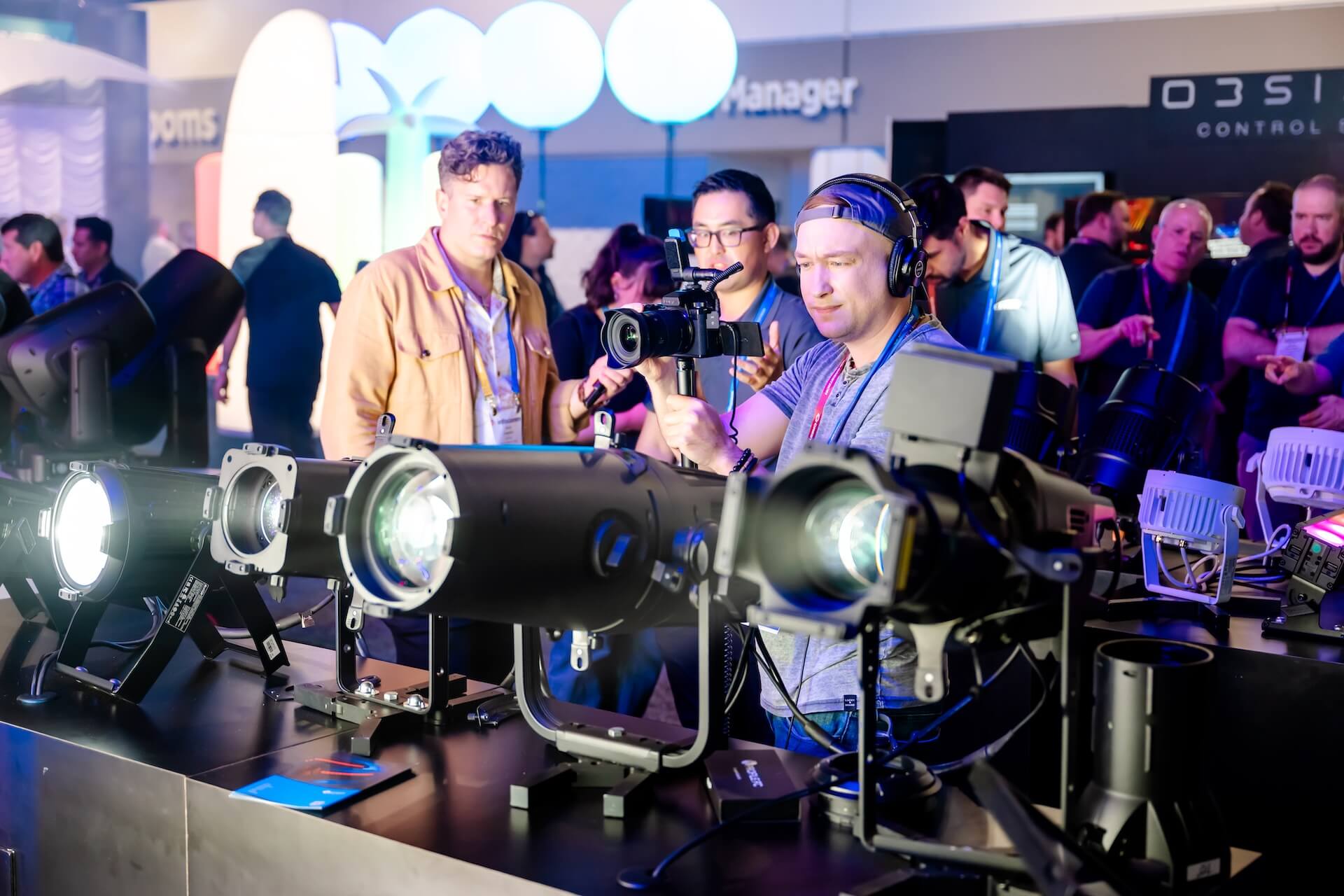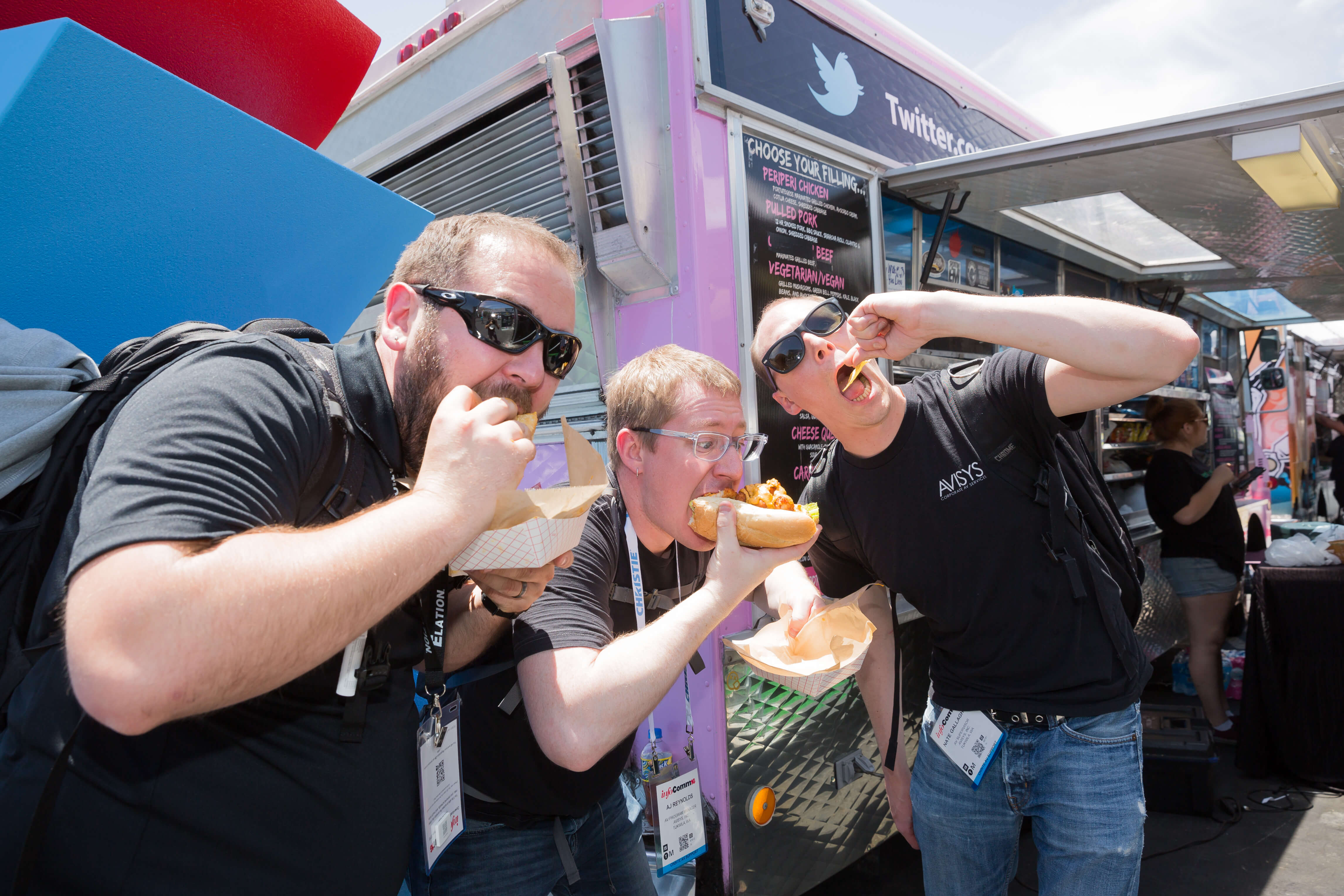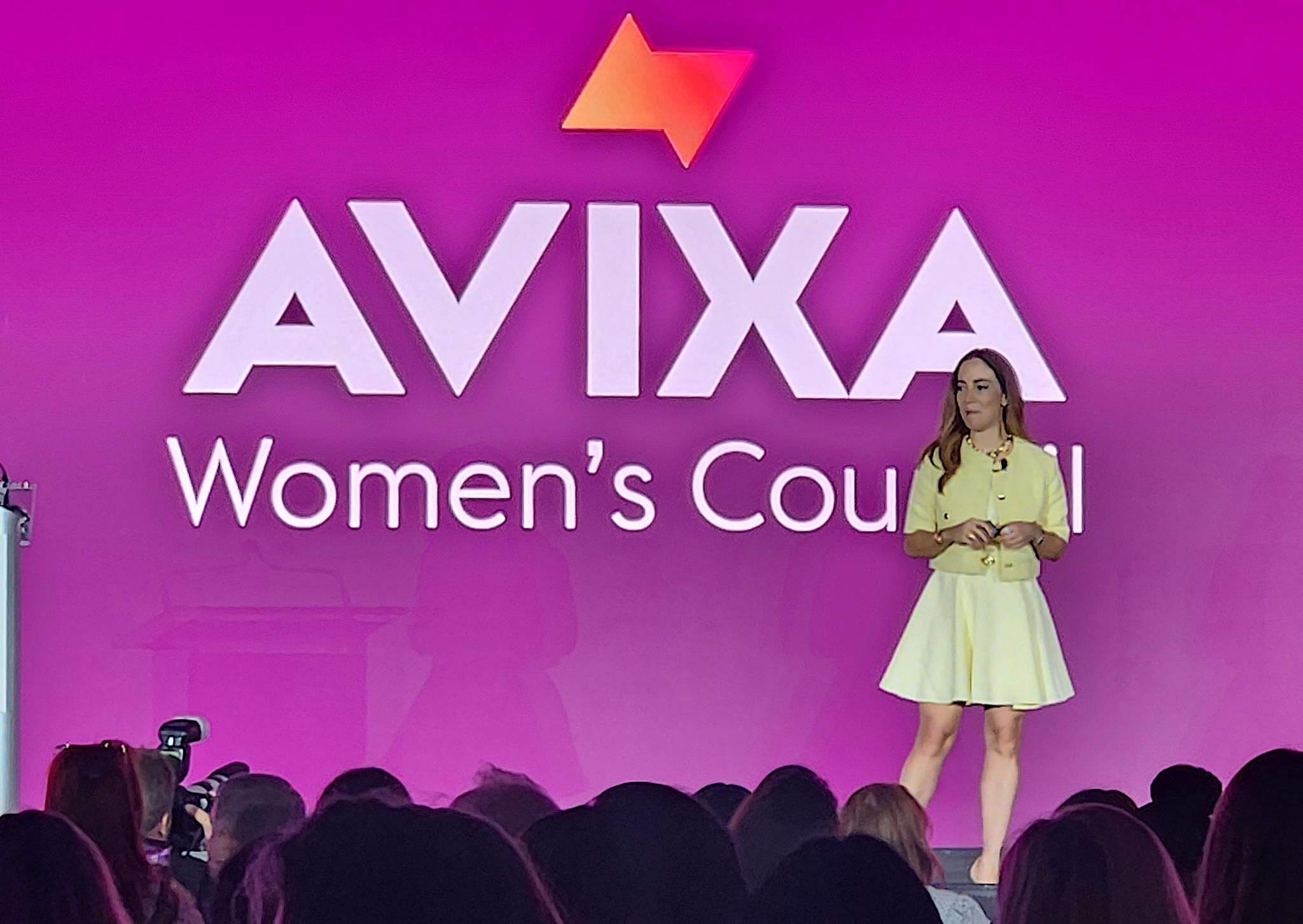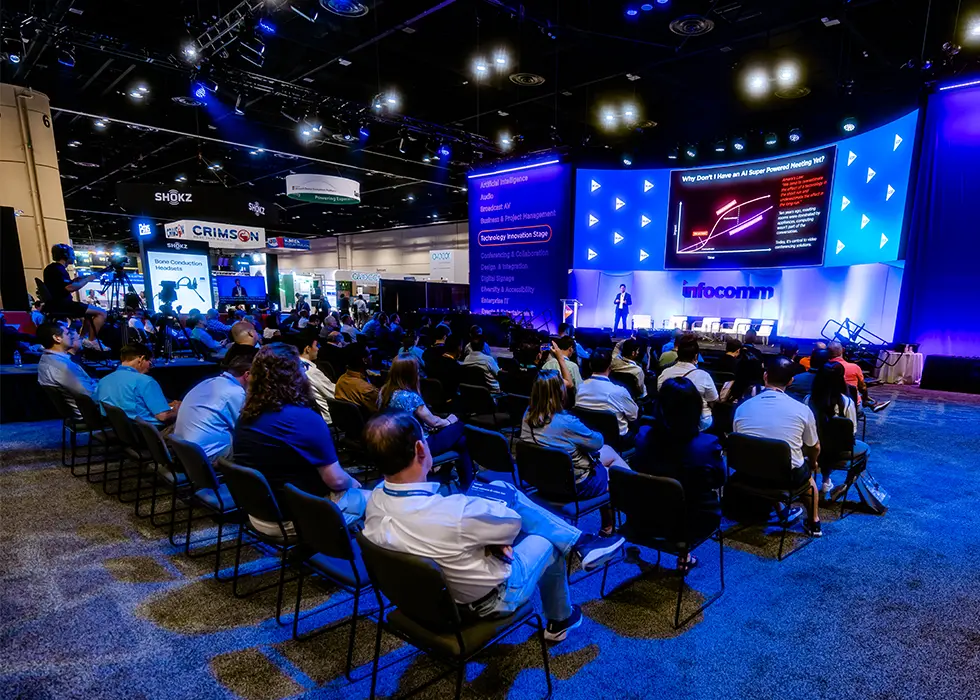
In this month's AVIXA Spotlight, Senior Director of Live Content Annette Sandler talks about the care, strategy, and community thinking behind InfoComm programming, and why Xchange Live is built for the conversations attendees bring with them.
Annette Sandler told me that InfoComm is one of her favorite things to talk about.
I took that as the kind of generous thing someone says at the beginning of an interview. But she spent the next hour proving it.
As AVIXA’s Senior Director of Live Content, Annette has one of those jobs that grows larger the more she explains it. Her team, she told me, “puts all the speakers on stages at InfoComm.” That means presentations, panels, trainings, tours, workshops, show floor stage experiences, and more than 250 sessions and programs built for attendees with different needs, backgrounds, responsibilities, and levels of experience.
So, yes. It’s as big a task as it sounds.
The Work Behind the Welcome
But it wasn’t the scale of the work that stood out most during our conversation. It was the care behind it. Annette speaks about InfoComm programming with the practical precision of someone managing a huge live event and the unmistakable warmth of someone who wants every attendee to feel like there is a place for them once they arrive.
At one point, I suggested that part of her role sounded like being the host of the party. She immediately recognized the comparison.
“That actually is exactly how I think about my role at InfoComm,” Annette said. “You’re invited to my house and you’re going to have a good time.”
It’s a funny image at first: one person thinking about a show the size of InfoComm as though she were welcoming people into her home. But the image became more and more fitting as Annette continued to describe the work. A good host thinks about flow. A good host notices who needs an introduction, who needs a place to sit, who needs help finding their way, and when the energy in the room needs to shift. A good host knows that people may remember the main event, but they often value the conversation they had because they were standing in the right place at the right time.
That is a useful way to understand Annette’s work at InfoComm.
Building for Every Kind of Attendee
Live content, as she describes it, stretches far beyond formal education sessions. It includes deep technical workshops, show floor conversations, tours, meetups, partner programs, stage sessions, and the quieter connective tissue that helps attendees find their way through an enormous event. Some people come to InfoComm for CTS prep. Others are chasing the latest trends in digital signage, conferencing and collaboration, AI, live events, broadcast-style production, or workforce development. Some are new to the show. Others know the industry well but are facing responsibilities that keep expanding.
Annette and her team have to build for all of them.
Headed to InfoComm?
Stop by the Xchange Live stage to discover new ideas, expand your network, or participate in vibrant discussions.
A Program Shaped by its Industry
That starts with listening. Annette spoke often about the importance of bringing more voices into the programming process. Advisory groups, industry subject matter experts, AVIXA colleagues, exhibitors, partners, and practitioners all help identify what people are actually working on, what they are asking about, and what conversations are beginning to matter more than they did a year ago.
One of her biggest concerns is repetition. With an event as large as InfoComm, it would be easy for sessions to begin sounding alike, especially when many of the same industry conversations surface across different parts of the show. Annette’s answer is not to flatten the program into one unified tone. She wants variety. She wants different levels of technical depth, different perspectives, and different ways into the material.
“This is a big industry,” she said.
That may sound obvious, but it is a useful reminder. InfoComm is not serving one kind of attendee. It is serving technology managers, integrators, designers, engineers, educators, manufacturers, live events professionals, business leaders, and people whose roles increasingly cross the boundaries that used to separate one AV discipline from another.
"Choose Your Adventure"
Annette sees that shift clearly. Today’s attendees, she said, are less likely to move through InfoComm in one straight line. They pick the sessions, topics, tours, and conversations that match the work in front of them. A technology manager may need to understand conference rooms, digital signage, internal communications, live production, and networked AV systems. A person who once came to the show for one solution area may now need to explore three or four.
Annette called it a “choose your own adventure” model.
That phrase stayed with me because it captures both the opportunity and the challenge of InfoComm. A show this large can give attendees almost unlimited ways to spend their time. That same abundance can also be overwhelming. Annette’s job is to make sure the content program gives people useful choices without leaving them feeling lost in the options.
Planning the Party
The planning process reflects that balance.
Some parts of the InfoComm program have to be built far in advance. Longer training sessions, workshops, and technical education require early planning, speaker confirmations, and a schedule attendees can use when registration opens. Other parts of the program come together closer to the show, especially the show floor stages. That timing gives Annette and her team room to respond to what is timely, topical, and newly relevant.
She described the process as layered, almost like a waterfall. The deeper education comes first. Then the team keeps building, adding conversations that can meet the moment more directly as the event approaches.
That approach matters in a year when AI is everywhere.
Annette said AVIXA made a deliberate decision not to isolate AI into a single track at InfoComm. Instead, AI shows up across the program because it is affecting every area of AV. For her, the important question is not whether AI is a trend. The important question is what AI means for the people designing systems, testing them, maintaining them, and incorporating them into real AV workflows.
“When we talk about AI at InfoComm,” Annette said, “it’s a conversation that you’re not going to hear at another technology show because it starts with the AV practitioners.”
That sentence gets to the heart of how she thinks about programming. InfoComm can address the same large forces shaping every technology industry, but its value comes from grounding those conversations in the day-to-day work of AV professionals. The sessions need to feel specific. They need to be useful to the people who are actually building, troubleshooting, managing, and improving these systems.
The same principle applies to one of the other themes Annette is thinking about: the rising sophistication of AV professionals working with broadcast-style technologies. Coming out of the pandemic years, expectations for digital content quality rose dramatically. Those expectations have carried into corporations, universities, live events, and other environments where AV professionals are now helping deliver more polished, more sophisticated experiences.
Annette is excited by that shift because the conversation has started to circle back through InfoComm. People who developed new skills, adopted new equipment, and solved new production challenges are now returning to the show to share what that learning looked like in practice.
Workforce development is another area she sees as urgent, even if it is sometimes quieter than the flashier technology conversations. AV is technical, but it is also creative. Training new talent, supporting new ideas, and helping people learn from each other remain essential to the industry’s future.
Again and again, Annette returned to the same idea: people learn from other people.
Big Xchange Energy
That is where Xchange Live fits so naturally into the story.
Xchange Live is designed for the kind of conversation that can be difficult to capture in a traditional session description but easy to recognize once you are in the middle of it. It is the moment when someone shares what went wrong on a project, someone else nods because they have been there too, and the room starts turning experience into something useful.
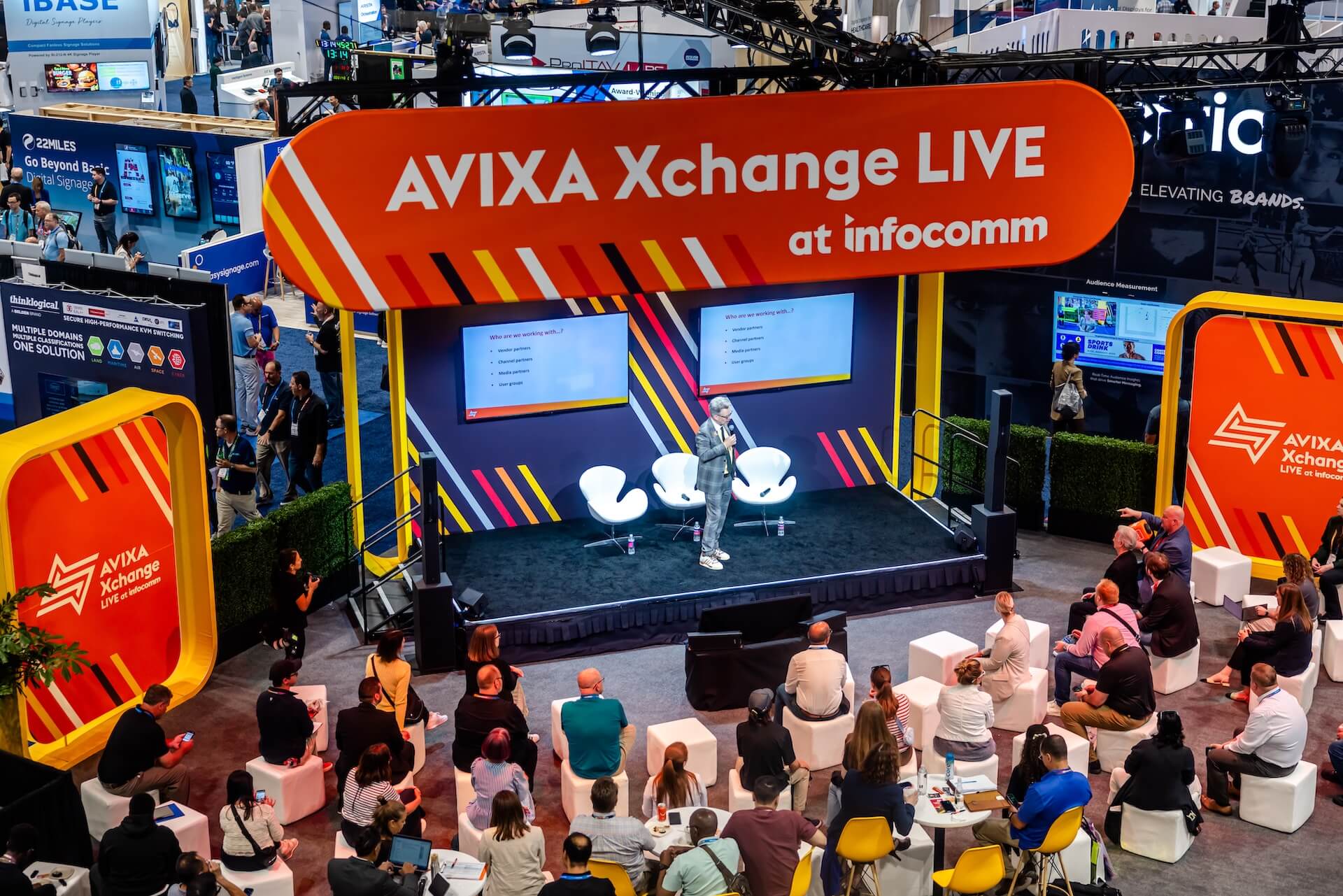
For Annette, a successful Xchange Live session should “start or end or really land with folks in the audience talking to each other.” The programming is built around topics where attendees can learn from the speakers, but also from the person sitting next to them.
That creates a different kind of energy.
Annette pointed to sessions built around practical, experience-driven conversations: stories from failed network deployments, lessons from the touring industry, and solution-focused discussions for specific attendee communities. These are not topics that depend only on polished presentation. They benefit from honesty, back-and-forth, and the kind of shared professional relief that comes when someone says, yes, that happened to us too.
“When you set it up as a back and forth between the speakers and the audience,” Annette said, “it’s more like you and all your buddies just chatting about how your day went.”
That is part of the charm of Xchange Live. It gives an intentional home to conversations that already happen at InfoComm. The difference is that here, they are invited on purpose.
What went wrong?
What worked?
What are you trying next?
Who else should I talk to?
What did you see on the floor that I need to see before I leave?
Those questions are especially useful at a show where there is far too much for one person to see alone. If someone only has a little time, Annette said, Xchange Live can help them connect with other attendees, ask what they have seen, and get a better short list of where to go next.
That is a great thing for attendees because Xchange Live benefits from Annette’s view of the entire InfoComm content ecosystem. She is not thinking about one stage in isolation. She is thinking about technical sessions, show floor programming, tours, meetups, partner conversations, attendee needs, and the broader rhythm of the event. Xchange Live becomes one more way to help people navigate the show, find each other, and continue the conversation beyond the session itself.
The Magic of a Moment
Near the end of our conversation, I asked Annette what part of the live content process feels most rewarding once InfoComm is actually underway.
After all the planning, prep calls, speaker coordination, room scheduling, advisory input, internal collaboration, and attempts to anticipate what attendees will need before they arrive, what is the moment that makes her think: yes, this worked?
She talked about standing near the back of a packed show floor stage, somewhere by the AV booth, trying not to get in the technicians’ way. From there, she can see the audience. She can also see the people who were not planning to attend at all, the ones who stop in the aisle because something on stage has caught their attention.
“Capturing people’s attention on a busy show floor is a challenging thing to do,” Annette said. “There’s a little bit of magic that goes into weaving it all together.”
That image may be the best way to understand the work.
Annette and her team weave together speakers and sessions, practical needs and emerging trends, first-time attendees and longtime experts, technical training and hallway conversation, planned programming and moments no one can fully script. They build the structure, then make room for the human exchange that gives the structure meaning.
A person walking into InfoComm may not know how much work went into making the experience feel useful. They may not see the advisory conversations, the timing decisions, the speaker prep, the topic selection, or the careful effort to make a large event feel more navigable. They may simply find themselves in the right session, on the right tour, at the right stage, or in the right conversation at the right time.
That is the kind of work a good host hopes no one has to think too hard about while it is happening.
So if you find yourself at InfoComm wondering where to begin, Xchange Live may be a great place to start. Stop by for a session that speaks to the work in front of you. Stay for the conversation it sparks. And be sure to say hello to this year’s Xchange LIVE Guide before you leave.