What is “phygital?”
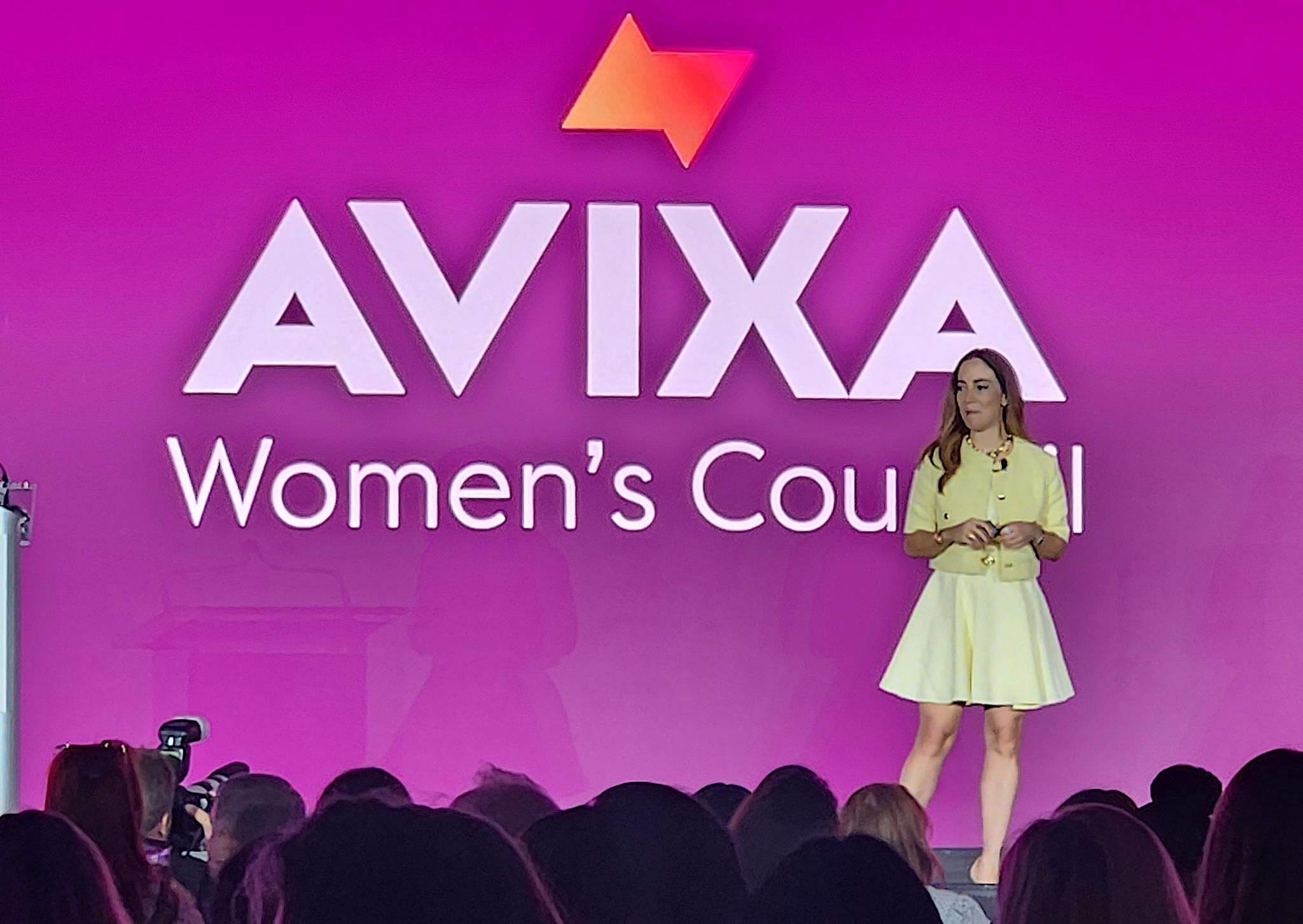
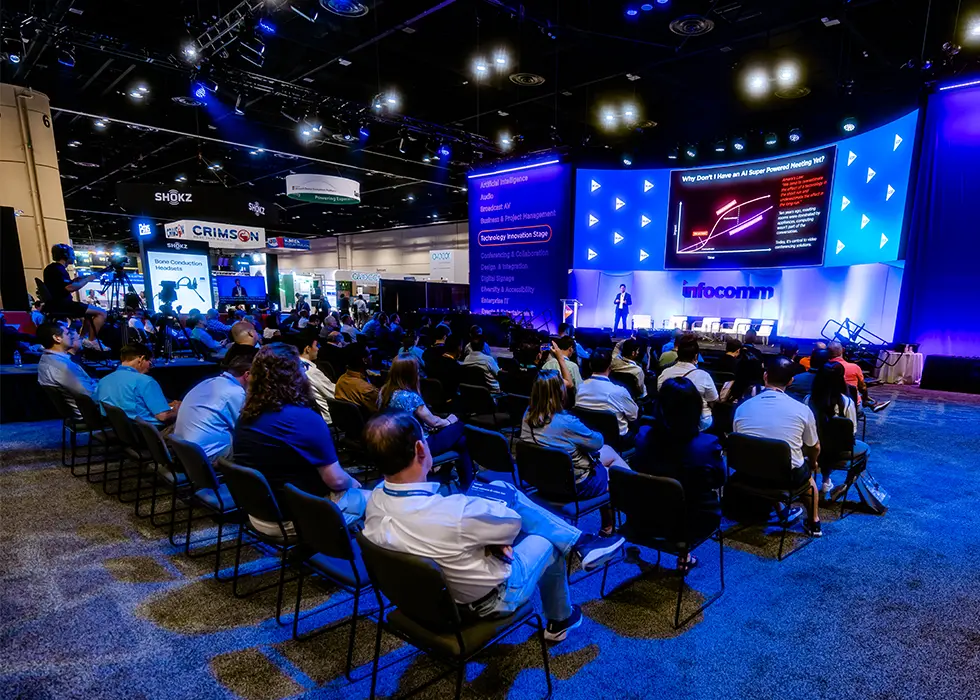
That question kicked off the "Let's Get Phygital: The New Playbook for Connected, Fan-First Experiences" session on the Spotlight Stage at InfoComm 2026, moderated by Amy DeLouise, Founder of #GALSNGEAR.
A blend of physical and digital, "phygital" describes the integration of both from the design stage through execution.
To illustrate why the concept matters, DeLouise pointed to the rapid growth of the immersive industry. She noted the global market was valued at $138 billion in 2025 and cited research showing that 73% of respondents would travel specifically for interactive experiences. Of those surveyed, 61% said they would make those trips one to four times a year, while another 12% said they would travel more than five times annually.
Loading...
She then asked the audience a simple question: How many of you have traveled specifically for an immersive experience or a sporting event? Hands quickly went up throughout the room, reinforcing the growing demand for interactive events that invite people to participate rather than simply observe.
Joining DeLouise were Laura Frank, Creator Advocate at Megapixel; Abbi DeLeve, Technical Sales Specialist for PIXERA at AV Stumpfl, Inc.; Addy Rose, Live Event Broadcast Technician and Experiential Event Organizer/Consultant with AR Co. & Encore Global; and Anna Lockwood, Head of Media and Sport at Telstra International.
The Audience Doesn't End at the Venue
One of the clearest themes to emerge during the discussion was that live events no longer serve just the people sitting in the audience.
Lockwood said she increasingly thinks about every event in terms of two distinct audiences: the people inside the venue and those watching remotely. While both are experiencing the same event, their expectations are often very different. Fans attending in person want an immersive atmosphere. Viewers watching from home, meanwhile, expect more control over how they engage with an event, including additional camera angles and personalized viewing options. As broadcasters and venues continue investing in connectivity, she said, those experiences are becoming more tailored to each audience.
Rose expanded on that idea by pointing to another audience that producers increasingly consider — people following events through social media. Rather than watching an entire broadcast, many viewers now consume live events through short-form videos shared across platforms such as Instagram, TikTok, and X. That reality has changed how production teams think about content, creating additional opportunities to capture moments that resonate well beyond the live audience.
Designing Experiences That Respond
As audience expectations evolve, so do the technologies supporting those experiences.
DeLeve shared the Oculus project at the George Bush Intercontinental Airport in Houston as an example of how multiple technologies come together to create an immersive installation. Located before airport security, it combines UHD-resolution canvases, Unreal Engine, LiDAR, weather information, and live flight data.
Unlike the promotional photos, the space is rarely empty. That created an interesting design challenge, as it needed to be engaging without causing people to stop for too long and risk missing their flights.
DeLeve said helping the client understand why Unreal Engine and high-performance media servers were necessary became part of the project. She compared Unreal Engine to an Xbox and traditional playback to a Blu-ray player to illustrate the difference between real-time rendering and conventional media playback.
Behind the scenes, multiple content sequences, pre-rendered transitions, and system logic had to work together. Because Unreal Engine takes time to load scenes, the team carefully coordinated the timing to create smooth transitions. LiDAR allowed particles to react as people walked through the space, with interactions carefully tuned to feel natural.
Building on the Oculus installation, Frank discussed what it takes to support increasingly complex AV experiences. As display resolutions continue to rise and creative LED installations evolve past traditional 16:9 formats, image processing and network infrastructure have become essential.
She referenced a recent project for JPMorgan Chase that required managing nearly 2,000 signal inputs throughout a 68-story building, explaining that Megapixel's processing technology served as the backbone of the system.
When Great Technology Goes Unnoticed
During the conversation, Frank also pointed to the fact that some of the most effective technology is the kind audiences never notice.
One of her biggest pet peeves, she admitted, is standing in a long security line watching the same content play on a continuous loop. She described a project at Portland International Airport where TSA wait time data was integrated into the content management system so programming adjusted based on changing wait times rather than repeating the same content.
Frank said audience interaction doesn't always come from touchscreens or mobile devices. It can also come from physical movement, environmental conditions, or live data. In this case, travelers may never have realized the content was changing, but that was exactly the point.
Technology Still Needs a Human Story
While much of the session focused on technology, the panel also discussed the role communication and storytelling play in creating meaningful connections.
For DeLeve, that starts with making technology easier to understand. With a background in literature and creative writing, she said those skills have helped her explain technical concepts in a way clients and partners can grasp. Just as importantly, they've helped bridge the gap between people from creative, technical, and storytelling backgrounds.
Rose, who produces corporate AV events and also freelances in esports, said storytelling is equally important in live productions. Fans travel from around the world to support teams and players, but they're also interested in the people behind the competition. Productions increasingly introduce audiences to players, rivalries, and the communities surrounding them, giving fans another way to connect.
She also shared examples of experiential activations designed to encourage participation. At Red Bull events, spaces have been created for influencers, cosplayers, players' families, and longtime fans to gather and be part of the action. State Farm's "Jake's Front Closet," another project she worked on, invited attendees to step into a recreation of the brand's well-known commercial set, create their own content, and share it on social media.
Looking Beyond the Technology
Audience questions shifted the discussion from technology to career development, with one attendee asking what skills matter most for professionals entering the industry.
Although each panelist arrived in the industry through a different path, their advice was surprisingly consistent. Technical expertise mattered, but so did curiosity, communication, and a willingness to keep learning.
DeLeve encouraged attendees not to be intimidated by the technical side of the business. The camera and production skills she developed early on, she said, have carried across broadcast, film, television, and immersive experiences.
Frank encouraged attendees not to limit themselves to becoming "T-shaped" professionals with expertise in a single area. Instead, she suggested developing expertise across multiple disciplines while learning how those specialties connect.
Rose reflected on her journey from replay operator and cable wrangler to camera operator, director, and producer, explaining that each technical role prepared her for the next opportunity. Learning the technology, she said, also made it easier to communicate with clients and production teams.
Looking back on her own career, Lockwood said she never expected producing wildlife documentaries in India would eventually lead her to sports broadcasting and media technology. Each opportunity, however, built on the one before it.
By the end of the discussion, "phygital" had become more than an industry buzzword. Through examples ranging from airport installations to esports and sports broadcasting, the panel demonstrated that successful connected experiences are built on far more than technology. They require thoughtful design, strong communication, and a deep understanding of how audiences engage.