
You’re two weeks from go-live on a corporate town hall. The client adds three remote panellists, wants clips “during the event,” and asks if IT can lock down who’s allowed to stream externally. They also want it to “look like broadcast.” Your quote, however, priced a room.
That gap is where integrators get dragged in. So, let’s talk about that.
HAMBURG OPEN, not to be confused with the tennis tournament (although that is also a great event), is an annual professional trade event for the broadcast, media, and AV industry, held at Hamburg Messe. It runs alongside IBC and ISE on Europe's industry calendar and positions itself as a practical, workflow-focused forum rather than a gear show — with programming aimed at integrators, production teams, and corporate media buyers navigating convergence between broadcast and enterprise AV.
HAMBURG OPEN brings this shift into specific relief, without pretending it’s a boutique problem for media teams. In its own 2026 closing report, the event lumps broadcast, streaming, and corporate video into the same production chain and leans hard on “practical solutions” and efficiency pressure. Read that as buyer-speak for: fewer staff, more output, and no tolerance for failure.
Corporate video is no longer “content.” It is an operational service most organisations now run every week: town halls, training, internal comms, product updates, stakeholder webcasts, hybrid panels, and recordings that get clipped and reused. When it breaks, it costs real money in wasted time and reputational damage. Nobody cares what camera you chose. They care that the CEO sounded like a bad phone call.
That split matters in procurement because it nudges “corporate video” out of the meeting-room bucket and into a managed event service with owners, rules, and risk.
Broadcast-quality corporate video is rising — and it’s dragging AV into production
Corporate buyers didn’t wake up one day craving studio toys. Distribution forced the change. As soon as a company streams to hundreds or thousands, it’s running a programme, with programme expectations: stable pictures, clean audio, consistent graphics, and a show that starts on time. Teams have effectively formalised that reality by splitting meetings, webinars, and town halls into distinct event types with different controls and expectations.
HAMBURG OPEN’s 2026 programme overview signalled how normal this has become by treating corporate video as a serious buyer group (including guided tours aimed at corporate video teams). That matters because it shows what people are buying now: repeatable builds and predictable workflows, not “one-off event rigs” that only work when the one magic operator is in the room.
AVIXA’s own take on corporate video production has been pointing in the same direction: corporate production is professionalising, expectations are rising, and teams are borrowing broadcast habits. The missing piece for many projects is integrator scope. Clients want a broadcast outcome, then procure it like meeting AV. That mismatch produces the panic call on the day.
Loading...
Where integrators fit: the corporate broadcast stack you must scope
If you want to keep this tied to real project work, stop talking about “pipelines” in abstract terms. Use a simple stack and make the client pick ownership for each layer. You don’t need to sell all seven layers. You do need to agree who owns them, or you will own them by default.
This is the ownership problem in one picture. Most projects fail because no one assigns responsibility across AV, IT, and Comms until the first live show blows up.
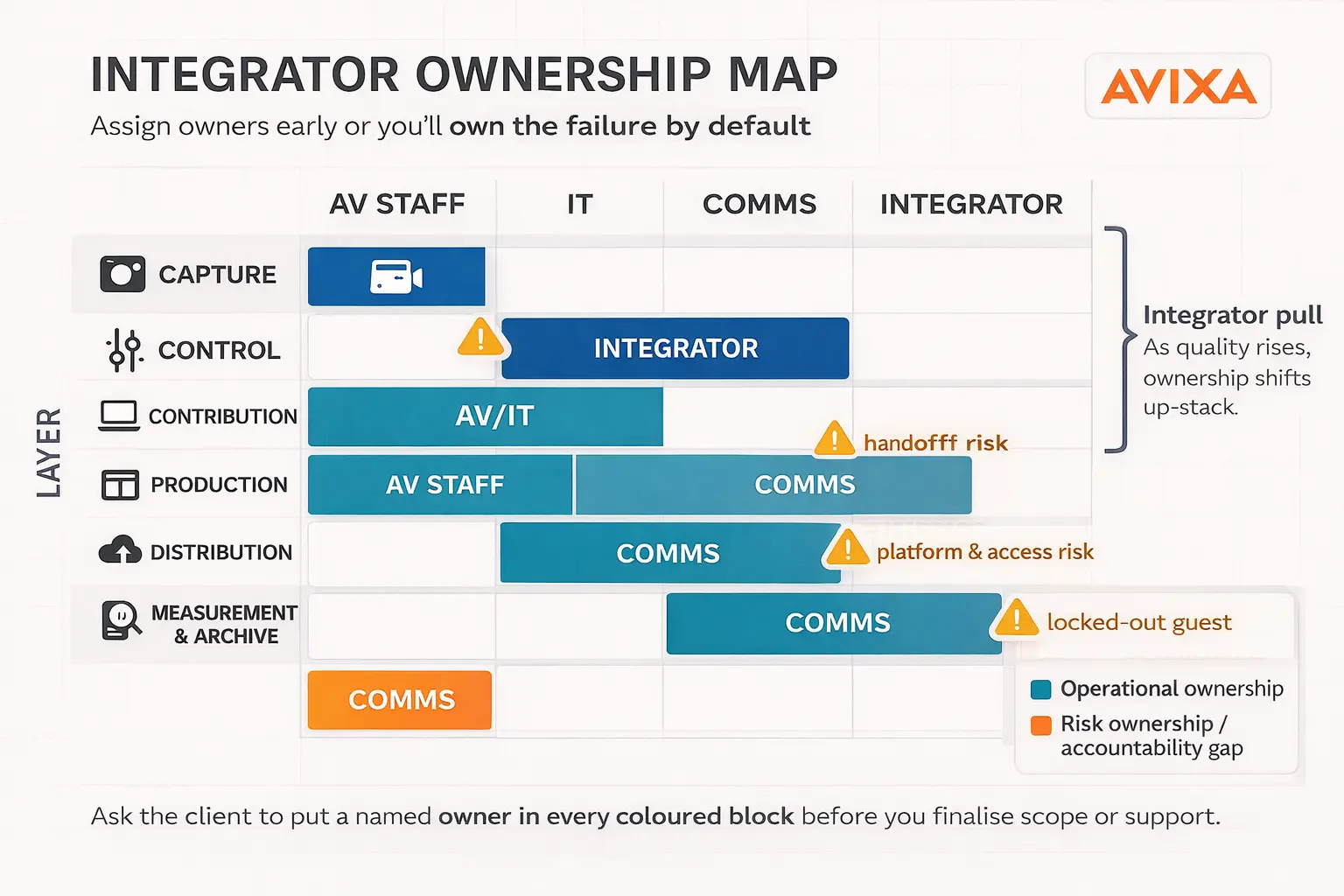
Figure 1: Ownership map: who typically owns each layer in real deployments.
Use this in discovery. Ask the client to put a name next to each block: who runs the live control layer, who owns platform admin, who approves distribution settings, and who holds the credentials. If they can’t answer in 60 seconds, procurement will still approve the spend, but the show will still fail.
Here’s the broadcast stack in one picture. It’s the fastest way to stop “broadcast-quality” turning into vague scope creep.
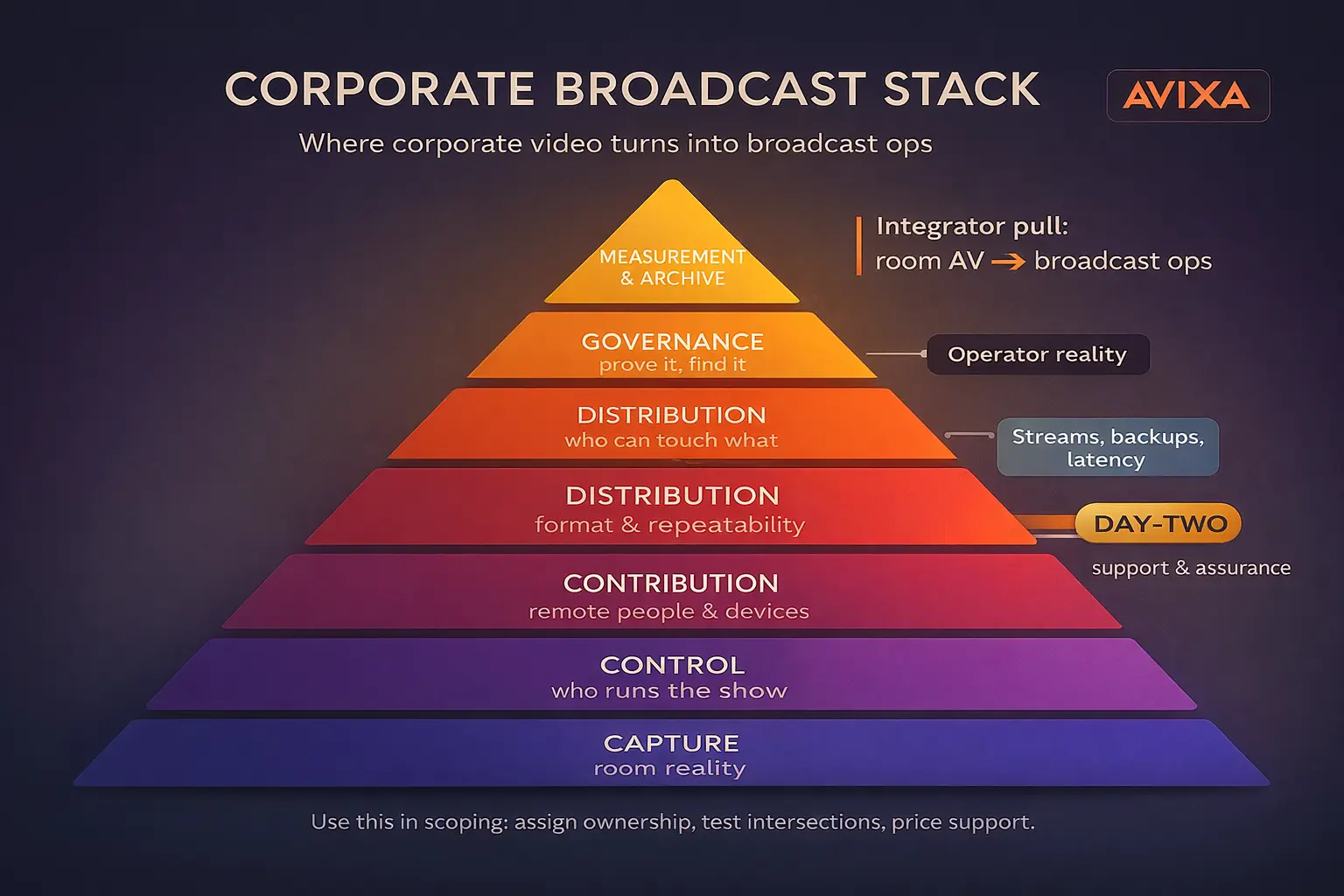
Figure 2: The corporate broadcast stack: the layers you must assign ownership for.
The mistake is thinking this is a gear list. It’s an ownership map. If the client can’t name who owns each layer, you’ll end up owning the messy bits by default.
Layer 1: Capture (the room)
Cameras, microphones, lighting, acoustics, sightlines, and layout. Corporate rooms are messy. Chairs move. Glass walls glare. HVAC noise sits under every sentence.
Integrator scope now includes designing for bad behaviour. If the system only works when the presenter stands on a mark and speaks perfectly, it will fail in the first real town hall.
Layer 2: Control (how you run it live)
Switching, mixing, routing, talkback, presets, automation, and safe “modes.” This is where meeting AV turns into production.
Integrator scope now includes calling the operating model early: self-run, operator-assisted, or operator-led. If you don’t name it, the client will assume “self-service” until the moment it isn’t.
Layer 3: Contribution (remote people and remote media)
Remote guests, screen shares, BYOD laptops, timing, and return audio. This is the most common failure point in corporate streaming.
Integrator scope now includes defining contribution rules, a rehearsal requirement for high-stakes speakers, and a failure plan that doesn’t derail the whole show when one guest turns up on a tinny headset.
Teams even bakes in a broadcast habit with a green room so organisers and presenters can set content and roles before attendees enter.
Layer 4: Production (the show layer)
Branded templates, lower-thirds, graphics cues, recordings, and clip turnaround.
Corporate teams want the same look every time, and they want junior staff to run it safely.
Integrator scope now includes templated scenes, naming rules, and simple operator routines that don’t depend on tribal knowledge.
Layer 5: Distribution (where it goes, and how it stays up)
Internal platform versus external platform, simulcast, backup paths, and recovery steps. Once corporate video becomes business-critical, downtime costs real money.
Integrator scope now includes designing distribution to match the risk profile and writing down recovery steps that a non-broadcast team can execute under pressure.
AVIXA’s guide to high-definition streaming is a useful internal reference here because it pulls stream quality and network discipline into the same conversation.
Layer 6: Governance (who can touch what)
Accounts, roles, permissions, credential ownership, update windows, and change control. IT and security will demand this. Comms will resist it because it slows them down.
Integrator scope now includes role-based access, account ownership rules, and a “who can change presets” policy that IT will sign and Comms will live with.
That’s not theory: Microsoft’s admin guidance on planning Teams town halls frames these as one-to-many events with defined organiser/presenter roles and preparation steps, which is exactly where governance starts to bite.
Layer 7: Measure and store (prove value and find it later)
Analytics, retention, archive policy, search, and reuse. Corporate buyers increasingly need numbers to defend spend. They also need speed: “find the clip,” “reuse the segment,” “show the engagement.”
Integrator scope now includes agreeing responsibilities for storage and retention, and making sure the recording workflow supports reuse, not just capture.
That stack is the cleanest way to connect HAMBURG OPEN’s “workflows across the production chain” to your day job. It turns ambition into scope. It also stops you being handed invisible responsibilities halfway through the build.
Convergence isn’t a buzzword. It’s three teams colliding in one room.
Corporate broadcast sits at the intersection of three cultures, and they don’t naturally agree.
AV teams think in rooms, devices, commissioning, and handover. Media production thinks in rehearsals, run-of-show, cues, and operator roles. Enterprise IT thinks in identity, governance, risk, and change control. Corporate video now needs all three at once.
HAMBURG OPEN’s closing report flags networked workflows, cloud infrastructures, and security as mainstream concerns, not specialist side topics. On the broadcast side, that “networked workflow” language has a formal meaning: AMWA’s NMOS IS-05 exists to standardise connection management across IP media systems. That lines up with what integrators are seeing: the “broadcast” parts of corporate video now live on enterprise networks and fall under enterprise rules
This is why integrators get dragged in even when they don’t want to. You’re the only party touching the whole chain. Facilities owns the room. IT owns the network. Comms owns the message. Nobody owns the stack end-to-end unless you force the conversation.
The skills gap is real — and it’s not about cameras.
Most people describe the skills gap badly. They talk as if the upgrade is “learn broadcast gear.” The real gap is actually operational.
Most failures don’t come from the kit. They come from predictable breakdown points that sit between teams.
Those failure points show up fast. Audio falls apart because the room is hostile. Contribution falls apart because remote guests behave like remote guests. Governance surprises land when IT locks down access a day before go-live. Workflow gaps appear when nobody owns rehearsal, run-of-show, or recovery steps. Integrators get blamed because integrators are the only ones touching the full chain.
The first gap is engineering discipline. IP media behaves differently under load, and timing problems don’t announce themselves politely. If your commissioning plan ends at “it streamed fine on my laptop,” you’re gambling with the client’s reputation.
The second gap is operating discipline. Corporate teams want reliability but often lack a show operating model. They don’t have rehearsals, runbooks, defined roles, or a plan for what happens when contribution fails. They have a calendar invite and a senior exec who expects it to work.
The third gap is governance discipline. Identity, permissions, credential ownership, patch windows, and audit expectations now show up in procurement questions. They don’t feel like AV. They decide whether the project gets approved.
You don’t need to become a broadcaster. You do need to design the system as if the organisation will run it repeatedly with imperfect staff, imperfect devices, and changing IT rules. AVIXA’s piece on streamer-style corporate setups is useful on this point because it focuses on repeatable components and operating habits rather than studio mythology.
What to sell next: packages that match how clients actually buy
Clients rarely buy “a stack.” Nor think in “stack terms”. They buy an outcome they can defend internally. Package your offer in outcomes and map each package to the stack layers you cover.
Here’s the business model change. If you keep selling a room, you’ll keep being treated like emergency crew. If you sell show reliability, you get pulled in early and paid for day-two support.
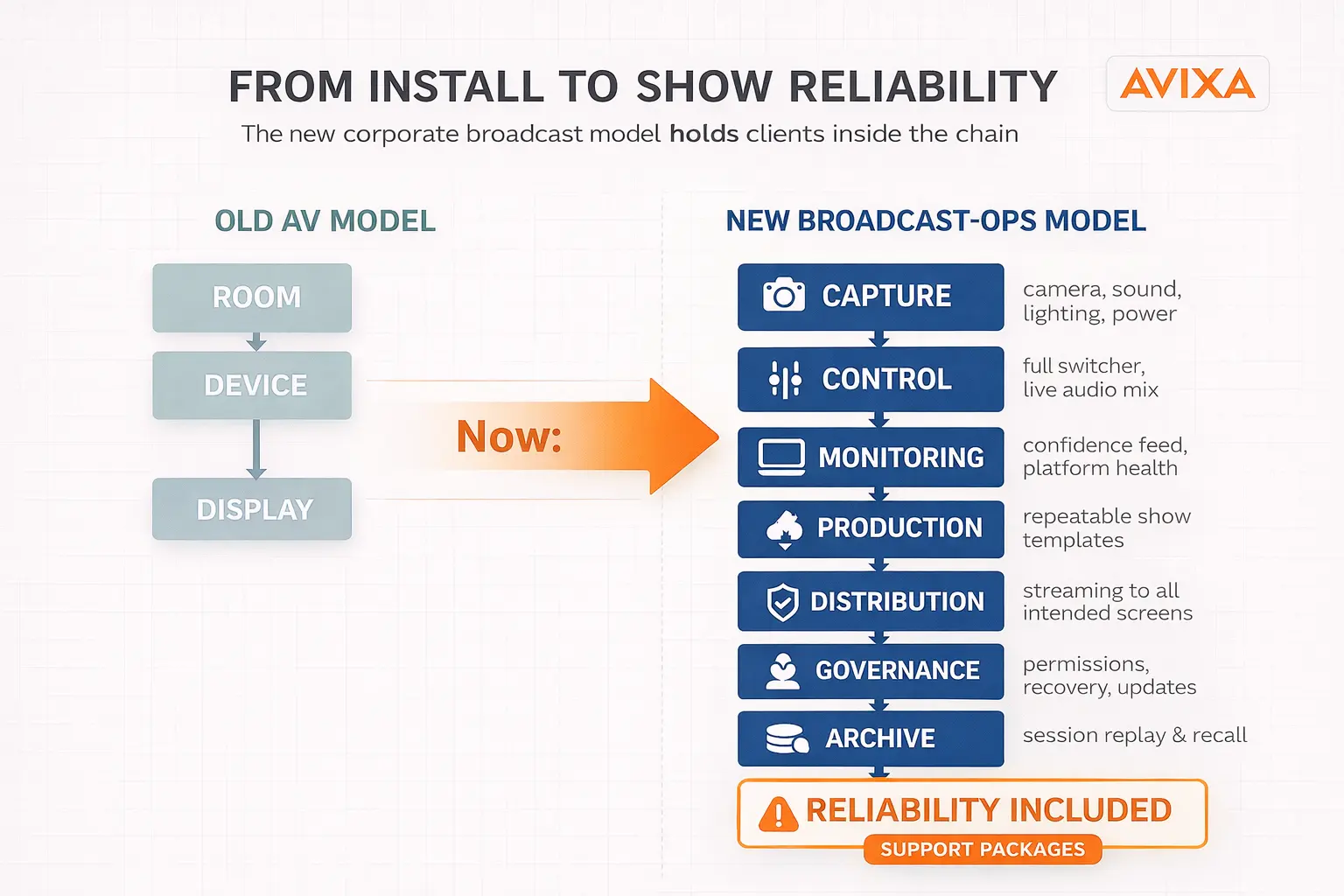
Figure 3: The shift: from one-off installs to broadcast-ops reliability
This is why your quote has to include operating reality: who runs the show, what happens when contribution fails, how distribution is monitored, and who controls permissions and updates. When you package that properly, “support” stops being a cost you eat and becomes a service the client recognises as necessary.
Start with a broadcast-ready room. Strong capture. Stable control. Predictable distribution. It must work when non-technical staff run it. This is for internal comms and training where consistency matters more than cleverness.
Then offer a studio-lite setup. Add templated formats, graphics discipline, and a defined contribution routine. Make the operator model explicit. This is for monthly town halls, webinars, and external-facing updates where failure is unacceptable.
For larger organisations, sell an enterprise production system. Multiple rooms, shared standards, shared governance, and day-two support baked in. This is not “one bigger room.” It is an operating model.
The commercial win is day-two work. Monitoring, template maintenance, account and permissions audits, operator refresh, and planned update windows cost money. They also save money, because they prevent the 07:00 rescue call on the day the CEO goes live.
My Verdict
Corporate video is turning into broadcast because the business now depends on it like broadcast. If you keep selling “meeting AV with nicer cameras,” you’re buying chaos you didn’t price. Use the stack in every discovery call, assign ownership for each layer, and put governance and contribution rules in writing. Then sell day-two reliability as part of the operating model, not an optional add-on. Do that and you stop being the emergency contact. You become the person shaping the spec, the tender, and the budget before the client paints themselves into a corner.
Main image credit: Kyle Loftus on Unsplash