This is a high-tech world cup. From smart balls to VAR rooms, there’s a lot going on. There’s even avatars of the players generated by AI.
If you’ve ever wanted to learn more about the tech, what goes into the production, and the intricacies of the FIFA VAR Room, here’s your chance. Let’s go behind the scenes at the 2026 FIFA World Cup.
The Technology: Offside Tech, AI Avatars, and More
First off, let’s learn more about the technology used at the world cup this year, from semi-automated offside technology to goal-line technology and beyond. What exactly do these technologies do and how do they work?
Semi-Automated Offside Technology
Semi-automated offside technology uses AI tracking cameras positioned around the stadium to monitor player movements and ball positions in real time. The tech can track multiple body points on a player several times per second.
This technology became famous during recent FIFA tournaments due to its impressive speed and precision. When the system detects a potential offside offense, it automatically alerts officials, reducing the time needed to make difficult offside decisions.
AI at the World Cup: Player Avatars
AI is also being used at this year’s world cup in several ways. One of the most interesting ways is the creation of AI-generated player avatars.
Before the tournament, FIFA digitally scanned each player to create a highly accurate 3D model that reflects the player's actual body dimensions and proportions. These avatars are integrated into FIFA's semi-automated offside technology, helping the system identify and track players more accurately during fast-moving or obstructed plays. Plus, the technology also improves visual explanations, generating 3D replays that illustrate offside decisions on stadium screens and TV broadcasts.
Goal-Line Tech and Smart Balls
Goal-line technology instantly tells referees whether the ball fully crossed the line. But how exactly does it work? Well, several high-speed cameras track the ball continuously. And if a goal is scored, then the referee receives an immediate signal on a specialized watch. This all happens within seconds.
FIFA has continued to use adidas Connected Ball Technology across several major tournaments, including the FIFA World Cup and other international competitions. The official match ball for the 2026 World Cup, adidas TRIONDA, features a state-of-the-art 500Hz motion sensor chip, which delivers insight into every element of the ball’s movement.
Curious to learn more? Read about all the tech involved in this article, World Cup 2026 Officiating – VAR and Technology Explained.
Behind the Scenes at the World Cup
Behind the scenes, a team of video match officials works with advanced replay technology, live camera feeds, and communication systems to review key incidents in real time. In this section, we'll explore what VAR is, what exactly goes on in the FIFA VAR room, and how it all comes together to be broadcast onto your TV.
What Is VAR?
The Video Assistant Referee (VAR) system helps referees review key match incidents using video replay technology. A team of video match officials works from a centralized Video Operation Room (VOR), often called the VAR room, where they monitor multiple camera angles in real time and communicate directly with the on-field referee.
In general, VAR is mainly used to help with decisions involving goals, offsides, penalties, and red cards. When a VAR recommendation is made, the ref can either accept it immediately or review the incident personally on a pitch-side monitor.
To understand how this technology is used to assist in decision-making, let’s explore a recent example. During the Brazil and Scotland game on June 24, VAR played a key role in overturning a goal. In the video below, around the 3-minute mark, you can see VAR officials identify a possible foul and assist the referee in reviewing the incident.
Inside the FIFA VAR Room
So, now that we know more about the technology involved, what exactly goes on in the FIFA VAR Room?
“Inside the room… headsets are tuned so tightly that you hear the faint static bump every time someone mutes to cough,” expressed Julian Vance in his article, Inside the VAR Room: The Tech Behind World Cup 2026’s Biggest Calls. “The replay operator’s keyboard is mapped like a fighting game stick: left hand on a matrix of hotkeys for [about] 4 second bookmarks, right hand on a jog wheel that spins through time like a scrub bar with haptic resistance. It feels less like watching soccer and more like operating a live-action replay engine, because that’s exactly what it is.”
A FIFA World Cup VAR operation typically has access to numerous broadcast camera feeds for replay review, with replay angles managed by dedicated replay operators. In addition, FIFA's semi-automated offside system uses approximately 12 specialized optical tracking cameras mounted around the stadium to track player positions and assist with offside decisions.
At the World Cup 2026, the host broadcast plan includes 45 cameras per match— including broadcast, cinematic, cable, referee-mounted cameras, and more, with additional super slow-motion systems added during knockout stages—providing extensive video coverage for both broadcast production and VAR review.
Broadcast Operations
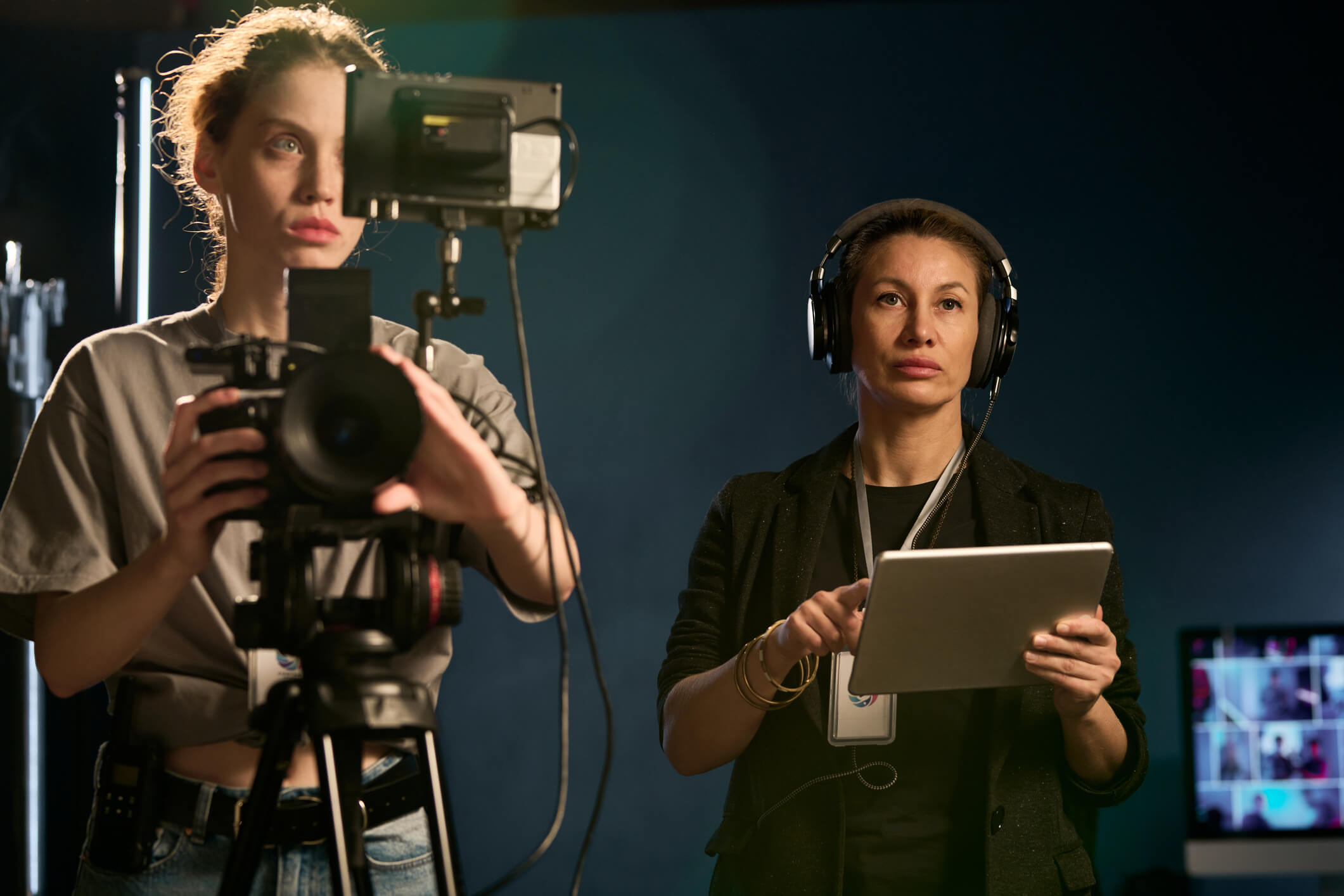
When fans tune in to watch the world cup, they see goals, celebrations, controversies (and maybe a hat trick or two). What they don’t see is the producers, engineers, camera operators, technicians, and others involved working behind the scenes to bring the tournament to life. There are thousands of moving parts that need to be synchronized.
The International Broadcast Center, located in Dallas, Texas, is the global media hub of the FIFA World Cup 2026 and the operational home for Media Partners covering the tournament. With 48 teams, 104 matches, three host nations, and 16 cities spread across North America, the tournament is redefining sports broadcasting. This has forced FIFA and Host Broadcast Services (HBS) to rethink traditional World Cup production workflows.
One of the biggest changes is the move toward centralized production. Rather than placing full production teams at every stadium, HBS has centralized many functions in Dallas.
For someone working in media, content, or live event production, the 2026 World Cup is a showcase for several major industry trends, including:
Remote Production (REMI) at global scale
Cloud and IP-based workflows
Centralized operations hubs
AI-assisted broadcast storytelling
And more
Wrap Up
Hosted across the United States, Canada, and Mexico, this World Cup has been full of excitement, twists and turns, and glorious moments of victory. From Mexico’s Julian Quinones scoring the first goal of the World Cup to Senegal’s Ibrahim Mbaye becoming the youngest African player to score, there have been so many outstanding, historic instances caught on camera and broadcast live to millions of fans.
With the aid of semi-automated offside technology, goal-line technology, artificial intelligence, and more, FIFA is raising the bar to create the best viewing experience for those in-person and those watching from home. What broadcast beauty shots were your favorite during this World Cup?
And if you’re itching for more sports-related broadcast moments, check out the video below!
Loading...