Europe's most interesting AV developments this August are happening because places are changing what they are for. Football stadiums want to earn money every day of the year. Leicester Square is preparing for a purpose-built immersive attraction. Outdoor advertising is becoming a programmable digital medium. A Helsinki festival is treating its industrial setting as part of the experience, while a London lecture theatre has been rebuilt for a world in which every presentation may also be a broadcast. The common thread is not another screen or processor. It is a shift in the economics of the places where AV operates.
Stadiums Are Becoming Year-Round Entertainment Businesses
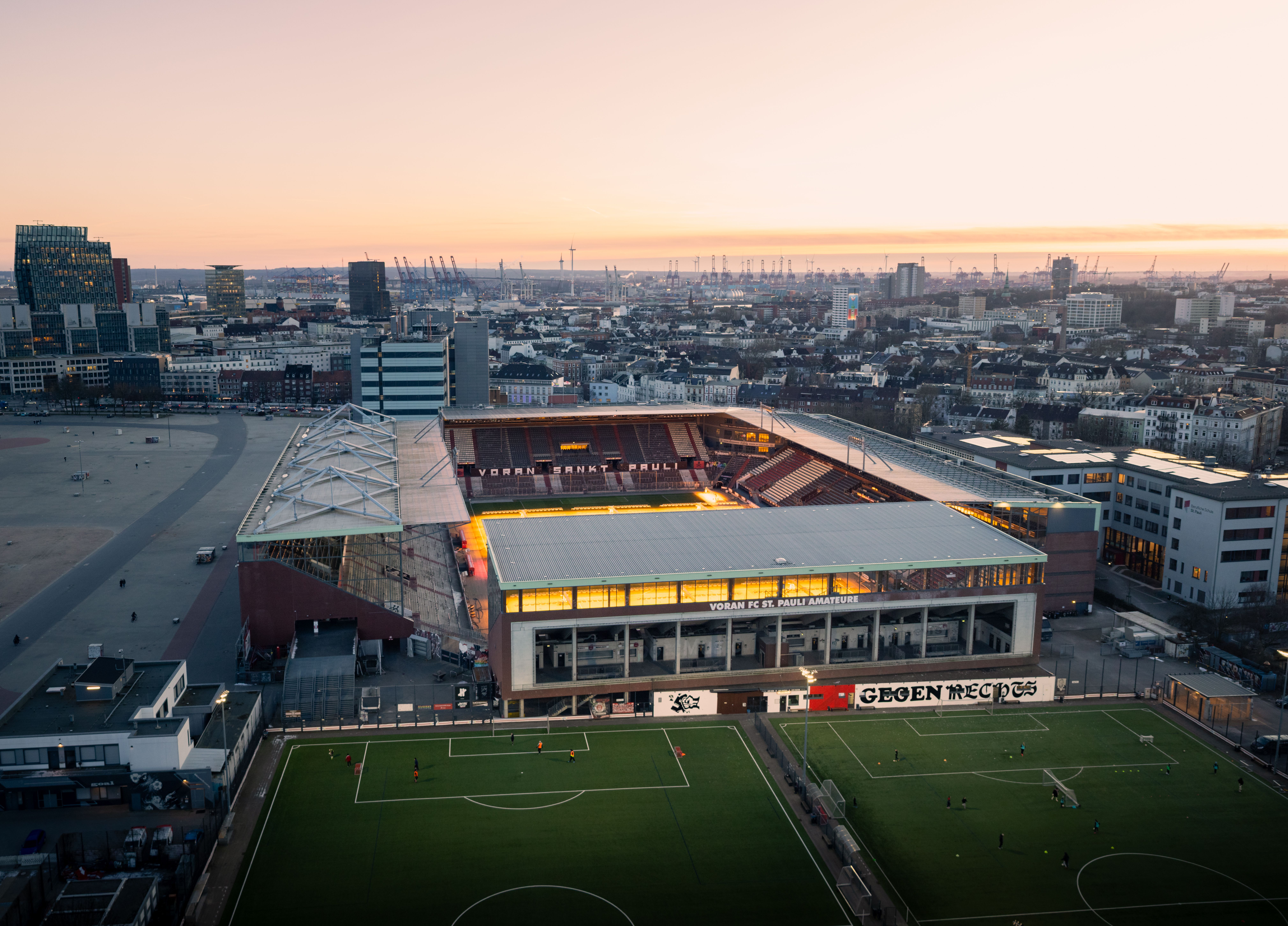
Coventry City and Coventry Building Society Arena have signed a 10-year partnership with Legends Global backed by more than £15 million of joint investment over three years. The programme aims to develop the arena as a destination for sport, live music, exhibitions, conferences, and hospitality 365 days a year, with investment in technology, infrastructure, operations, and premium spaces.
That matters to AV because a venue serving several businesses cannot optimise its technology for matchday alone. The same building needs to support game presentation, concerts, corporate events, hospitality, and conferencing without turning every change of use into a technical rebuild. AVIXA's recent examination of the permanent technology investment left behind by the 2026 World Cup makes the same point from another direction: the infrastructure that remains after the tournament is increasingly the valuable part. The stadium is becoming less a building that hosts events and more a technology-enabled entertainment business. The Coventry Building Society Arena announcement is a particularly neat example of that shift.
Leicester Square Is Planning for Immersive Entertainment
Soho Estates has submitted plans for LSX, a proposed purpose-built immersive visitor attraction in Leicester Square. The scheme would provide a large flexible attraction space across three double-height floors, alongside restaurants, bars, and a rooftop venue. The developers estimate that it could attract up to 1.9 million visitors annually and generate £48 million in additional visitor spending, according to the project's latest planning and consultation material.
The important part is not simply that London is getting another immersive attraction. LSX is being designed specifically because existing West End buildings often cannot provide the space, flexibility, and technical capability that large immersive experiences demand. That makes the building itself part of the AV proposition. Instead of installing a system around one permanent attraction, the venue needs to accommodate experiences that can change over time. For designers and integrators, that shifts the brief towards infrastructure that is flexible enough to survive the content installed on top of it.
LED Is Becoming Easier To Specify And Deploy
LED's next big change may have less to do with what the audience sees than with how manufacturers make the panels. New COB, COG, and flip-chip production methods are pushing the market towards greater standardisation, while preconfigured all-in-one systems are simplifying installation. Recent industry research cited by invidis in its analysis of LED manufacturing indicates that COB/COG technologies could account for 57% of the fine-pixel LED market by 2029.
The practical consequence is more important than the technology labels. When manufacturers can standardise the display, processing, cabling, mounting, and configuration, LED becomes easier to deploy without treating every installation as a bespoke engineering exercise. That matters in the expanding middle of the market, where a client may want the visual impact of LED without accepting the complexity historically associated with it. The result is not that every projector disappears. Rather, LED continues to become a viable option for a broader range of applications.
Digital Out-Of-Home Is Becoming Programmable Media Infrastructure
Digital out-of-home advertising accounted for 67% of UK out-of-home advertising spend in 2025, reaching £964 million, and IAB UK forecasts that the share will reach 76% by 2031. The figures come from IAB UK's latest digital out-of-home report. The shift is not simply from printed posters to screens. Advertisers are increasingly combining digital out-of-home with mobile, social, online video, and search, while audience data and programmatic buying are changing how campaigns are planned.
That turns a screen network into something much closer to digital media infrastructure. Content management, connectivity, scheduling, measurement, monitoring, and uptime become commercially important because the display is now one endpoint in a larger advertising system. IAB UK also identifies measurement standardisation as a continuing problem. For AV providers, that is a useful warning: the value of these networks increasingly lies in keeping them measurable and operational, not merely keeping the screens lit.
Helsinki's Flow Festival Makes The Venue Part Of The Experience
Flow Festival brought 91,000 visitors to Helsinki's Suvilahti from 14–16 August, using the former power-plant site as a collection of distinct performance environments rather than simply a backdrop for stages. Flow Festival's 2026 visitor report confirms the attendance figure, while the festival-area guide shows the scale and variety of the site: ten venues, including a Main Stage with a 57-by-8.4-metre video screen, the 15,000-capacity Silver Arena, the circular Balloon 360° stage, and smaller spaces with deliberately different identities.
The interesting shift is that the audience is no longer simply moving between artists. It is moving through a designed audiovisual environment. Architecture, lighting, video, sound, food, art, and circulation all contribute to the identity of the festival. That creates a broader role for AV: not a collection of systems attached to individual stages, but part of the architecture of the event itself.
Savoy Place Has Rebuilt The Lecture Theatre For A Broadcast World
IET London: Savoy Place has installed a 7-by-4-metre native 4K, 10-bit MicroLED video wall in its 451-seat Kelvin Lecture Theatre, alongside upgraded data and power infrastructure. IET's announcement of the new MicroLED installation describes the upgrade as part of a wider refurbishment of the venue. The room is used for conferences, presentations, lectures, and events that can extend beyond the physical audience through streaming and broadcast.
That is a useful model for corporate and institutional AV because the room has stopped being designed around the assumption that presentation and broadcast are separate activities. A display that works for people in the seats also has to survive cameras, streaming workflows, and increasingly demanding hybrid production. AVIXA's coverage of InfoComm 2026's experience hubs highlights the same convergence between live environments, broadcast, and workplace technology. The lecture theatre is a smaller-scale example of the same change: the room now has to perform for two audiences at once.