
For years, ePaper (electronic paper) has been best known through e-readers and digital displays. Today, it is finding new applications in the workplace, helping organizations create more flexible, efficient and sustainable environments.
From meeting room signs and desk displays to digital visitor badges and wayfinding, ePaper is becoming part of the everyday experience. Its value goes beyond the display itself, reducing friction and creating smoother interactions for employees and visitors.
As organizations rethink how people interact with their spaces, they are looking for solutions that support evolving needs without adding unnecessary complexity. For Luka Birsa, Co-Founder and CTO at Visionect and Joan Workplace, the opportunity lies in using ePaper where it can make the biggest impact.
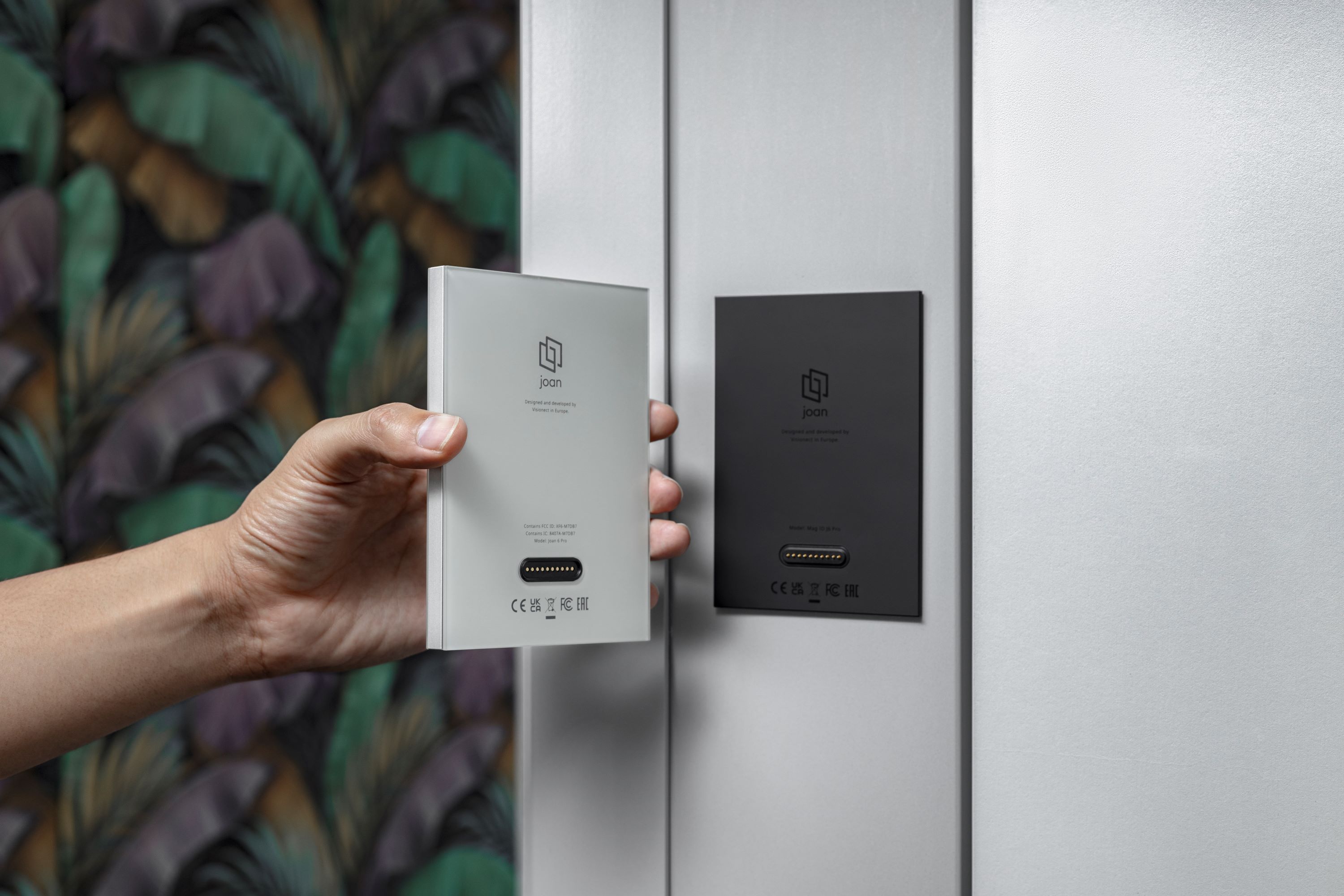
ePaper technology has been around for years, yet it seems to be gaining more attention in workplace technology. What's driving that momentum?
The technology didn't suddenly get great. I think it's the workplace that finally needed something like this, because ePaper is exactly what it's good at. The technology had been waiting for its moment, and then a couple of things happened at the same time.
You have hybrid work, which means people stopped owning a dedicated desk or meeting room, so having real-time status became much more important. The moment you stop assigning a desk and a room to every person, people walk into the workplace without knowing what's available, what's booked, or where they should go.
Around 60% of employers now share desks, and offices are often designed around more people than physical seats. So every space has to communicate what is happening in real time, whether that's a meeting room, desk, locker, or entrance area.
The other shift was that sustainability went from being a talking point to, let's say, a hard procurement requirement.
The last piece is the hardware itself. I remember five years ago, everything was much simpler. Now we have color, bigger formats, and really good wireless connectivity. When you put all of that together, you get technology that lets you put an always-accurate, sustainable display on every door and every desk without any cabling behind it.
What are the biggest misconceptions organizations still have about ePaper technology?
There are a lot of myths, so I'll touch on the biggest ones. I think people still see ePaper as a slow, gray e-reader from 15 years ago — something like the first Amazon Kindle.
It's important to know that today's ePaper comes in many sizes, supports color, has better transitions, and the technology has progressed a lot. The second misconception is speed. We still hear that the refresh rates aren't as fast as LCD or LED displays. That's true, but it's the wrong problem to optimize for. ePaper is used for screens that don't update very often, so it's really irrelevant how fast the screen refreshes.
Another is the low-power, sustainability side of it. People still think it's mostly marketing, but today you can have a wirelessly connected ePaper screen that, if the technology is done right, can last for months or even years on a single battery. That's a big advantage for sustainability-conscious customers.
Loading...
How do you see workplace technology evolving over the next three to five years?
I think two things will happen in parallel. We can also talk about AI, which is kind of the third piece.
First, I think we'll see more and more screens becoming part of the environment. The really loud, attention-grabbing screens will start to disappear because they can be distracting. Instead, we'll see calm, always-connected surfaces integrated throughout the workplace. Think about it from a display perspective. Every meeting room already has a screen, but I think you'll see even more displays on desks, assets, visitor touchpoints, and other places throughout the workplace. Then it becomes a question of whether your system can actually manage all of that.
The second thing is that sensors are becoming much more affordable. They'll soon be inexpensive enough for the mid-market, and integrating those sensors won't be a selling point anymore — it will simply be an expectation. The system will bring all of those pieces together.
Underneath that, there's a much bigger shift happening. I think it's an architectural shift. We're moving away from software that's designed for people to click through and toward workplace infrastructure that's designed to be orchestrated. It's machine-readable, policy-driven, and API-first.
What that means is the visible hardware becomes a little less interesting, even though there will be more of it. The real evolution happens in the platform behind it. And I think sustainability sits underneath all of this — not as a feature, but as a baseline.
What role do you see AI playing alongside ePaper and other workplace technologies?
I'll answer this one a bit against the grain. When GPT-3 launched, every product company scrambled to bolt AI onto everything. We deliberately didn't. We spent about three years watching where it was genuinely going before we shipped anything, because "add AI" is not a strategy.
The way I think about it now is that AI is a connector. It's becoming the layer that helps coordinate the workplace — understanding how a building is used, working out what should happen, and connecting different systems together. But all of that lives in software. For it to do anything useful in a real office, it needs a way to sense the physical space and act in it.
That's where ePaper and a platform like Joan come in. They provide the connection between the digital systems behind the scenes and the physical workplace people interact with every day. So the display isn't a gimmick with a chatbot attached to it. It becomes the way information and decisions appear where people actually need them — on the door, the desk, or the badge.
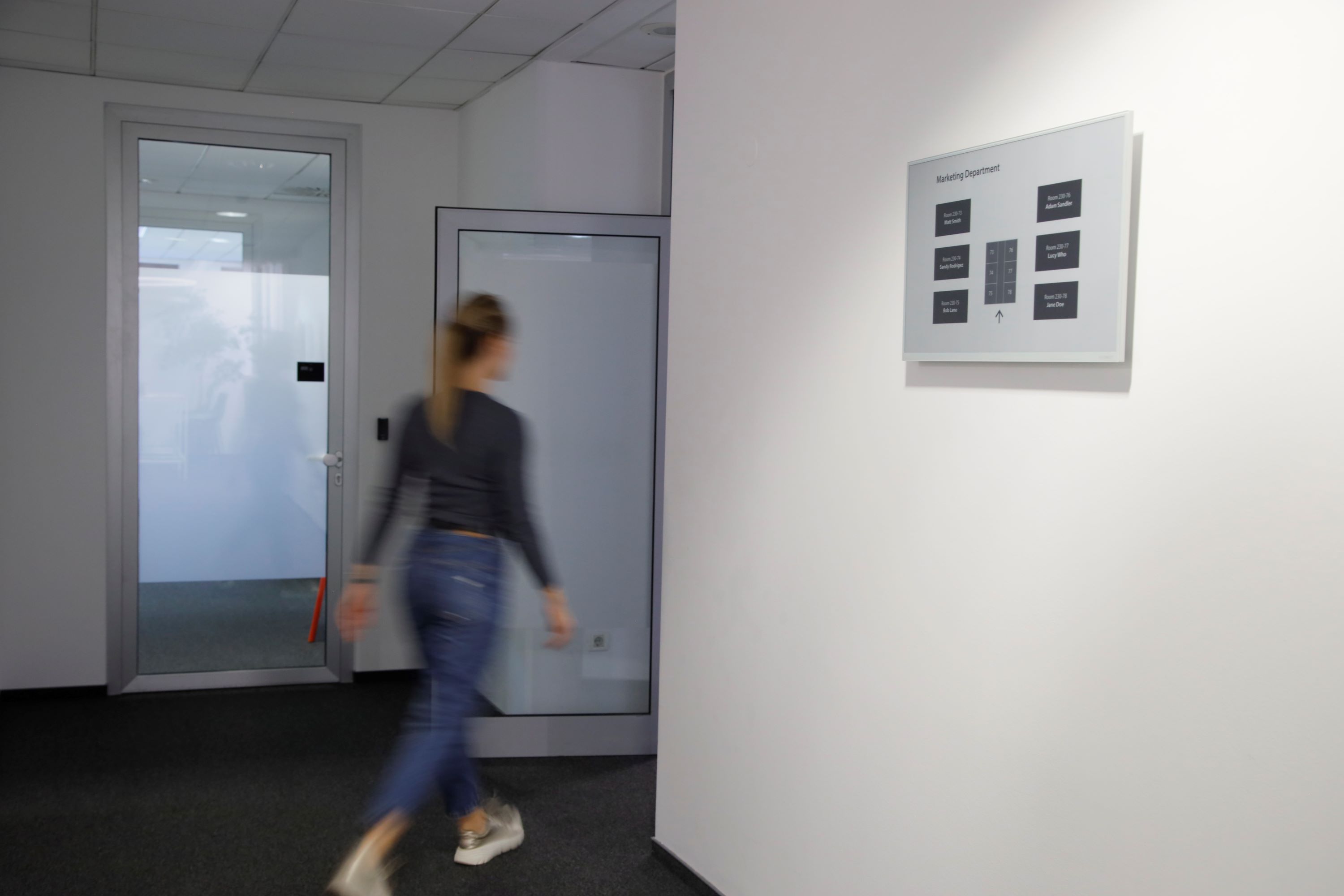
Is there anything about ePaper or the future of workplace technology that deserves more attention than it's currently receiving?
I'm kind of a realist when it comes to this. There's a lot of technology out there that doesn't really answer the question, "Why does it exist?" People build things because they look impressive, but they don't always ask whether they're actually creating value.
On the other hand, I think the less flashy improvements deserve more attention. Making small changes that reduce friction and improve the user experience is where companies should really focus.
I'll give you an example. Companies spend a lot of money on large technology initiatives, but many everyday workplace experiences still haven't changed. Visitors are often still greeted with a paper sign-in sheet or a disposable printed badge. That has a real impact on someone's first impression when they walk into your office.
Organizations should spend more time asking, "Where are the friction points?" and then focus on solving those problems instead of chasing the next big enterprise technology story.
One more thing: we're not focused on the front end. We’re not talking about just the displays that we put somewhere. The real beauty for the future is how the platform is built behind it.
We’re also currently working on improving some of the digital signage aspects. Digital signage has always been one of the more established topics in the ePaper industry and beyond. We don’t necessarily want to compete on the displays themselves, but rather on how easy they are to manage, integrate, and turn into something useful for users.
Again, we’re talking about the overall user experience and not just the shiny, big things in the front. I think one thing that’s important to us as a brand is moving away from focusing only on numbers and specifications and instead focusing on what we’re actually solving.
We strongly believe that being a vertically integrated provider — where we do everything in-house — allows us to truly understand the problem, apply the right technology, and create a more unified experience.