Once a company has determined what it wants to produce and identified an appropriate space, the next step is designing the studio as a complete production environment.
This is where many projects can go wrong.
A professional-looking studio can still be difficult to use if the acoustics are poor, camera positions weren't considered early enough, the control room is inadequate, or the set doesn't support the company's actual production needs.
The studio should be designed around the production requirements and workflow of the video team.
The Control Room Needs to Be Part of the Design
The control room is often treated as an afterthought. But it shouldn't be.
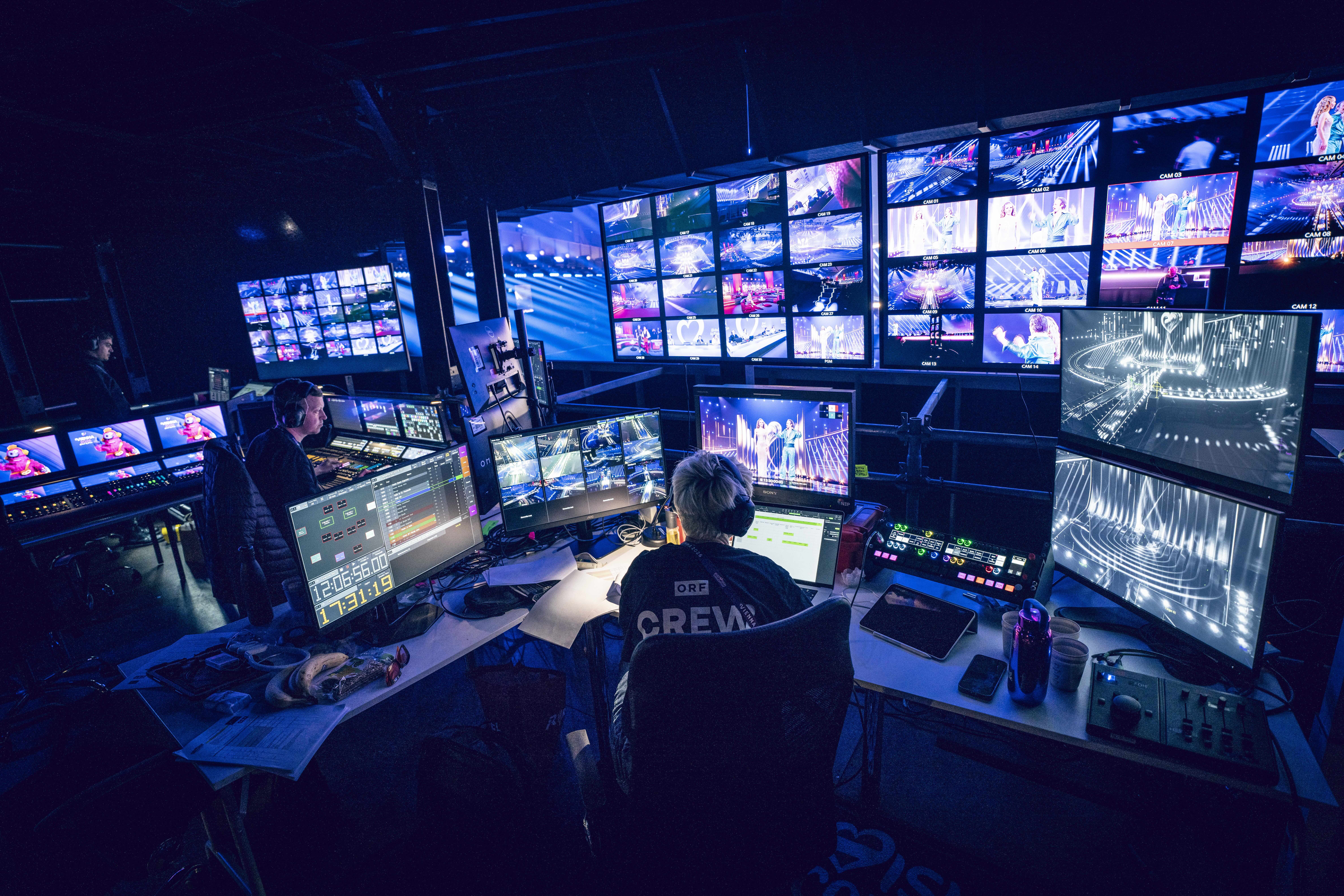
The control room may contain the video switcher, audio console, production computers, recording systems, graphics, streaming equipment, monitoring, communications, and other technology. It also should have appropriate sightlines into the studio, cooling, acoustics, power, data, and enough space for the people operating it.
Personally, I like having a window in the control room that looks out onto the studio, so communication is easier.
If the studio is going to support live productions, the control room becomes a critical part of the overall system.
Think About Camera Positions Before the Room Is Built
Where will the cameras go? That sounds simple, but camera positions affect almost everything else. You need to consider presenter positions, set design, backgrounds, lighting angles, teleprompters, camera movement, lens selection, audience or guest seating, sightlines, and cable paths.
A camera position that looks fine on a floor plan may not work once you put a person on the set and turn on the lighting. Planning these positions early can prevent compromises later.
Acoustics Should Be Designed, Not Added Later
A professional-looking studio can sound bad if acoustics aren't addressed early on.
The room should be evaluated for sound isolation, reverberation, HVAC noise, exterior noise, noise from adjacent rooms, foot traffic, and equipment noise.
Acoustic treatment isn't simply a matter of putting a few sound panels on the wall.
The architectural construction of the room can have a major effect on sound isolation. I've found that a properly designed double-wall approach can make a significant difference in reducing sound transmission and sound leaks.
If you're building a new headquarters, early coordination between the architect, acoustical consultant, AV team, and studio designer can pay off significantly.
Decide Whether You Need Permanent Sets
Some companies need a very flexible studio, where sets can be moved in and out as needed. If you need flexibility, you may also need additional storage space to store sets and furniture. Other companies need permanent environments for specific applications.
One of our clients, Mattress Firm, required permanent but modifiable bedroom sets with walls and lighting. Each set had basics such as different-sized beds, windows, and other elements, but the environment could be completely changed by bringing in furniture, bedding, pictures, and other decorative objects.
One company may want a permanent executive interview set while another may need a product demonstration area. A set can represent a brand. A company selling consumer products might need enough room to demonstrate its products on camera.
In a recent podcast studio that we created, the set designers added a real brick wall with mortar instead of a brick-look set material. That became a permanent backdrop.
I've worked on corporate studios where the requirements were very different from the typical 20-by-20-foot studio. The studio should be designed around what the company actually needs to produce—not around an arbitrary room size.
Don't Design the Studio Around Today's Technology Alone
Technology changes. A studio designed today may still be in use 10 or 15 years from now. That's why I recommend leaving flexibility wherever possible. Think about things you may need in the future as well as the things that could change over time.
You might want additional cameras. Additional network connections may be needed. Future control systems might be integrated. Additional lighting might become necessary. New streaming requirements could require changes. Remote production capabilities might be added. Additional sets might be wanted over time.
You don't necessarily need to purchase everything on day one, but you should think about what you might need later. It's much easier to install conduit, cable pathways, power, and infrastructure during construction than it is to tear open finished walls several years later.
Start With Production Requirements, Not an Equipment List
When I begin working with a company on a studio project, I don't start by asking which cameras they want. I start by asking what they want to accomplish.
Who will use the studio?
What will they produce?
How often will they use it?
Will productions be live or recorded?
How many people need to be on camera?
Will there be permanent or modular sets?
Will the studio have one presenter or several people on a set?
Will products be displayed?
Will the company want multiple sets?
And then there's the all-important question: What is the expected budget?
A studio project can involve architectural coordination, room layout, acoustics, HVAC, lighting, set design, equipment selection, infrastructure, system integration, installation, and testing. But these elements need to work together as one production environment—not as a collection of separate components.
Design the Studio Around What You Need to Produce
Essentially, there is no single formula for designing a corporate video studio. One company may need a simple space for executive interviews. Another may need multiple sets, product demonstrations, podcasts, live events, or a combination of them. But the technology, room layout, acoustics, lighting, sets, control room, and infrastructure all need to support those requirements.
That's why I believe the process should always start with the production goals—not the equipment list.
A studio isn't successful simply because it has cameras and sophisticated technology. It is successful when the entire environment works together and allows the people using it to produce the content they need.
The goal is to create a production environment that serves the company today and can continue to serve it as its needs evolve.